
The most important digital payment trends 2023 in Switzerland
The most important digital payment trends 2023 in Switzerland
Melanie
Frutiger

2022 was once again a turbulent year. The Covid pandemic continued to linger, the Russian-Ukrainian war broke out, the energy and commodity crisis intensified, inflation skyrocketed, and consumer spending plummeted. The repercussions of all this — and more — were felt in e-commerce: The lockdown-induced boom was over.
Yet, this year has also taught us a lot, perhaps even more than we think. The tough times have made the e-commerce industry more resilient: Companies became more flexible to remain competitive. And the future of payment is undoubtedly digital.
In this article, the Swiss online payment service provider Payrexx explains current and future trends that will shape and influence digital payments in Switzerland in 2023. Online comerciantes should keep an eye on these.
Trend 1: Mobile Payment and Wallets become the new standard
Paying via smartphone is becoming increasingly popular, and by 2023 most customers will process their payments using mobile payment applications like Apple Pay, Google Pay, Paypal (primarily e-commerce in Switzerland), TWINT, and Samsung Pay.
These applications offer a convenient and secure way to make payments and are becoming increasingly important in the e-commerce sector. By using NFC technology (Near Field Communication, abbreviated NFC, is a short-range wireless technology that enables devices to communicate when in proximity of about ten centimeters) and QR codes, customers can easily and swiftly pay contactlessly via smartphones or wearables. For businesses, it will be indispensable to offer these payment options.
Trend 2: Growth of QR-code-based payments
In recent years, QR-code-based payments have continued to establish themselves and by 2023 they will play an important role in the field of digital payments.
Firstly, it is essential to understand how QR code-based payments work. QR codes are two-dimensional barcodes that can be scanned using a smartphone camera. Once the QR code is scanned, the user is automatically redirected to a payment page where they can complete the transaction. This simple and convenient payment method offers numerous advantages for both customers and businesses. For customers, it means they do not need a special payment card or hardware to make a payment. They can simply use their smartphone to scan the QR code and complete the payment. For businesses, the growth of QR-code-based payments means they can offer their customers a fast and convenient payment method without the need for special hardware or payment terminals. This can be particularly beneficial for smaller businesses that cannot afford the costs of installing payment terminals.
An example of the growth of QR-code-based payments is the Chinese online comerciante Alibaba, which enables a simple and convenient payment system for its customers using QR codes. In Switzerland, QR codes are mainly known in connection with TWINT and the new Swiss QR bill. Payrexx has developed a simple QR-code solution for SMEs, which supports not only TWINT but also all relevant payment methods in Switzerland.
Trend 3: Increase of “Buy now, pay later” (BNPL) payments, both online and in-store
“Buy now, pay later” (BNPL) is a payment method that allows customers to make their purchases immediately but defer payment to a later date.
BNPL has gained popularity in recent years and has become a trend in digital payments worldwide. One of the main reasons for the growing popularity of BNPL is that it is particularly attractive to younger consumers who may have limited financial resources and find it challenging to pay for larger purchases upfront. Additionally, the payment process is very flexible and secure.
Finally, the COVID-19 pandemic has contributed to BNPL becoming a trend as many people, due to economic uncertainties and limitations in physical shopping, have become more cautious about spending money and are seeking alternative payment options like BNPL, which allow them to make purchases without having to pay the full amount upfront.
In fact, the trend could also become a permanent attractive solution for the younger generations in Switzerland. The advantages for consumers include:
Payment is only required after receiving and inspecting the goods. Refunds to the end customers are often not necessary.
Larger purchases are possible without prior saving.
Handling through the payment service providers' apps is intuitive and secure.
However, there are also disadvantages and risks that everyone should be aware of if they intend to make purchases with deferred payment in the future:
additional fees in case of delayed payment
credit limit often non-transparent
payment terms not always adjustable
According to the Online Comerciante Survey 2022 — a study by the E-Commerce Lab of the Zurich University of Applied Sciences (ZHAW), two-thirds of comerciantes offering BNPL see mainly the advantages in acquiring additional customers through a broader range of payment methods, as well as the higher conversion rate, the loyalty of existing customers, and the constant availability of this payment method.
Ivan Schmid, CEO and founder of Payrexx, expects that BNPL will also establish itself in stores and the B2B sector, as increasingly more business processes are being digitized, allowing companies (especially young startups) to improve their cash flow by deferring payment for purchases to a later date.
In Switzerland, the following BNPL providers are mainly known: Klarna, bob Finance, MF Group, SwissBilling, Byjuno and Ideal Payment. The offerings from bob Finance, SwissBilling, and Ideal Payment are available with Payrexx. In 2023, several new providers like BNPL from TWINT (in partnership with SwissBilling) and others will boost the subject.
Trend 4: Biometric authentication becomes standard
The use of biometric authentication methods such as facial recognition, voice analysis, and fingerprint scanning will continue to increase, and by 2023, many companies will rely on these technologies to verify user accounts and make payment processes more secure. By using biometric data, fraud and identity theft can be prevented. Example: The online merchant Amazon already allows its customers to make purchases directly using facial recognition.
Also, in the area of 3-D Secure in version 2, biometric authentication is used with a new approach through a broader data spectrum. 3-D Secure is a security protocol for online payments developed by major credit card companies. It aims to increase the security of online purchases by introducing an additional security layer that is activated for each online purchase.
Trend 5: Increase in instant payment solutions
The use of instant payment solutions will continue to rise, and the technology will become a preferred payment method for many customers and businesses. Instant payment solutions allow for real-time payments, offering a quick and convenient alternative to traditional payment methods like bank transfers.
With instant payment solutions, transactions can be completed within seconds, making them ideal for fast transactions, such as purchases in the e-commerce sector. Another advantage of instant payment solutions is their high security. Using encrypted data transfers and modern authentication methods like biometric technologies, payments through instant payment solutions are very secure.
In terms of instant payment, Switzerland currently lags far behind internationally. Nevertheless, there are some projects and efforts to develop and advance instant payment standards. More banks are already offering P2P payments in real time. For instance, Yapeal. Payrexx will also offer a Swiss instant payment solution for the e-commerce sector in cooperation with banks.
Trend 6: Growth of fintech companies
The number of fintech companies offering innovative payment solutions will continue to grow, and in 2023 these companies will play an important role in digital payments. By focusing on customer needs and their advanced technologies, they will provide an alternative to traditional banks.
There will also be increased collaboration between online payment providers and traditional financial service providers.
“The payment sector is on a growth path, also because small and medium enterprises, public institutions, and comerciantes want to integrate payment and financing options into their processes”
said PwC fundraising expert Sherin Maruhn in an interview with the news agency Reuters at the end of December 2022. Source: Cash article from December 18, 2022
Trend 7: Spread of wearable payment technologies
The spread of wearable payment technologies, such as smartwatches and fitness trackers that can be used as payment methods, is steadily increasing. These technologies allow users to make payments easily and conveniently via their wearable device by holding their device to a payment terminal or authorizing their payment through a corresponding app. An example of such wearable payment technology is the Apple Watch. The Apple Watch can be connected to the iPhone, allowing users to make payments via the Apple Pay app. Users can add their credit or debit card and then make payments in stores, restaurants, or online by holding their Apple Watch to the terminal or authorizing it through the app.
Another example is Garmin Pay (company headquartered in Schaffhausen) — a payment function available on most Garmin fitness trackers. Users can add their credit or debit card and make payments in stores or online by holding their Garmin watch to the terminal or authorizing their payment via the Garmin app. The spread of wearable payment technologies offers users a convenient and secure way to make payments. These technologies also enable users to leave their physical wallets at home while still making payments, which can be especially beneficial for athletes and people who are frequently on the go.
Trend 8: Increased focus on security
In the field of digital payment, a focus on security is becoming increasingly important as more people shop online and make payments. With the growing use of technologies like mobile payments and online banking, the risk of cyber-attacks and data abuse also increases.
To ensure the security of transactions and personal information, it is important to use secure payment methods and secure online payment providers and to regularly conduct security updates. The introduction of regulations and compliance standards also contributes to improving security in the field of digital payment.
The PCI-DSS (Payment Card Industry Data Security Standard) Level-1 is an internationally recognized security standard developed by the Payment Card Industry Security Standards Council (PCI SSC). It specifies how companies must securely handle credit and debit cards to minimize the risk of data breaches and misuse. The PCI-DSS Level-1 standard is considered the highest level of security and sets stringent requirements for managing security measures and protecting sensitive customer data. Companies that meet the PCI-DSS Level-1 standard can ensure that they provide their customers with a secure transaction process and protection of their personal data. The payment provider Payrexx annually meets the latest PCI-DSS Level-1 standards at the highest security level.
Trend 9: Virtual credit cards
A virtual credit card is a type of electronic payment method that allows online purchases without possessing a physical credit card. It is created through an online account (usually via smartphone app) with a credit card company or bank and can then be used for online payments. Besides classic credit cards, there are also prepaid credit cards and debit cards (Debit Mastercard, Visa Debit) as virtual cards.
Virtual credit cards typically have a limited validity and a set amount available for payments. They are safer than traditional credit cards as they cannot be stolen or lost, and personal information does not need to be provided to use them.
The use of virtual credit cards will increase as they offer a simple and secure way to pay for online purchases. Key advantages of virtual credit cards are:
Flexibility: Virtual credit cards can be easily created and deactivated, making them easy to manage and control.
Easy setup: There is no paperwork or waiting time to obtain a virtual credit card, as it can be set up online.
International usability: Virtual credit cards are globally accepted and can be easily used for online purchases and payments abroad.
Anonymity: Virtual credit cards allow for anonymous transactions, as no personal information needs to be provided.
Learn more now about accepting virtual credit cards with Payrexx. A good provider overview for consumers is available at Moneyland.
Trend 10: Growing popularity of P2P payment services and platforms
Platforms that allow users to make direct payments to each other will continue to gain popularity for the following reasons:
Convenience: P2P payment platforms allow users to send and receive payments directly from their smartphones or computers without needing cash or checks.
Security: P2P payment platforms often use security measures such as encryption and secure authentication to protect users' financial information.
Wide acceptance: Many P2P payment platforms are widely accepted and used by many people, making it easy to send and receive payments from others.
Cost: P2P payment platforms can be more cost-effective compared to traditional payment methods as they often have lower or no fees.
Social payments allow users to donate and send and receive money with friends and family directly through social networks like Facebook and Instagram or payment services like TWINT, Paypal, or increasingly via Neon bank apps.
This type of payment will likely continue to grow in importance, especially among younger users.
Trend 11: Omnichannel payments
More and more customers are making purchases across different channels and devices. Omnichannel payments enable businesses to provide their payment options for all channels, thereby improving user-friendliness and customer satisfaction. They also make it easier for customers to make payments, whether shopping online or in a store, and allow tracking and managing payments across different devices. Omnichannel payments thus help improve the customer experience and strengthen customer loyalty.
Trend 12: Increasing use of blockchain technology for micropayments
In recent years, the use of cryptocurrencies like Bitcoin, Ethereum, and Litecoin as a means of payment, especially for micropayments, has continued to spread, and this trend will persist into 2023.
In light of current events, it is easy to forget that the crypto industry has developed significantly in recent months despite market turbulence. With The Merge, the Ethereum ecosystem has seen a significant technological advancement that will improve the scalability and mass suitability of the Ethereum blockchain.
Blockchain technology has the potential to be used as a new standard for micropayments, as it enables fast, secure, and cost-effective transactions. With Centi Payment Services (Centi Ltd), there is an interesting project in Switzerland that allows micropayments in real-time and almost without cost.
Central Bank Digital Currencies (CBDC) on the rise
CBDCs (Central Bank Digital Currencies) are digital currencies issued by central banks. They are often considered a possible alternative to traditional currencies and could play an important role in digital payments in the future.
There are several reasons why CBDCs are considered a future opportunity in the field of digital payments. Firstly, they are faster and more cost-effective than traditional payment methods because they can be transferred directly between two parties without the need for intermediaries. They can also serve as a means to promote financial inclusion by providing access to financial services to people without a bank account or with poor credit.
However, there are also challenges to consider when introducing CBDCs. Concerns about privacy arise, as central banks may have access to financial transactions conducted with CBDCs. There are also questions regarding regulation and handling of cyber risks.
Globally, there are two major megatrends (megatrend transparency and megatrend globalization) driving digital transformation. No one can resist these trends — they are the “flow of history” of our society. Considering this, and the fact that new CBDC projects are being published daily, the Swiss National Bank (SNB) as an innovative central bank in Central Europe must keep up.
Although SNB board member Andrea Maechler stated on January 18, 2022, at an online financial conference of Goethe University in Frankfurt that the SNB rejects a digital central bank currency (CBDC) for private individuals for widespread use for everyday transactions because it believes the risks outweigh the benefits, we at Payrexx are convinced that a digital franc will be introduced in the foreseeable future.
Further information on the topic:
Conclusion
Overall, 2023 will be an exciting year for the digital payments industry, with numerous new developments and innovations. We can look forward to seeing which new products and technologies the industry will expect in the coming months.
Disclaimer: The opinions expressed in this article about trends in the digital payments market reflect the personal views of the experts at Payrexx AG and may not be complete or correct.
Create your own successes with Payrexx
Payrexx offers a simple and convenient payment solution that allows your customers to easily choose their preferred payment method, as well as an optimized checkout to increase your conversion rate.
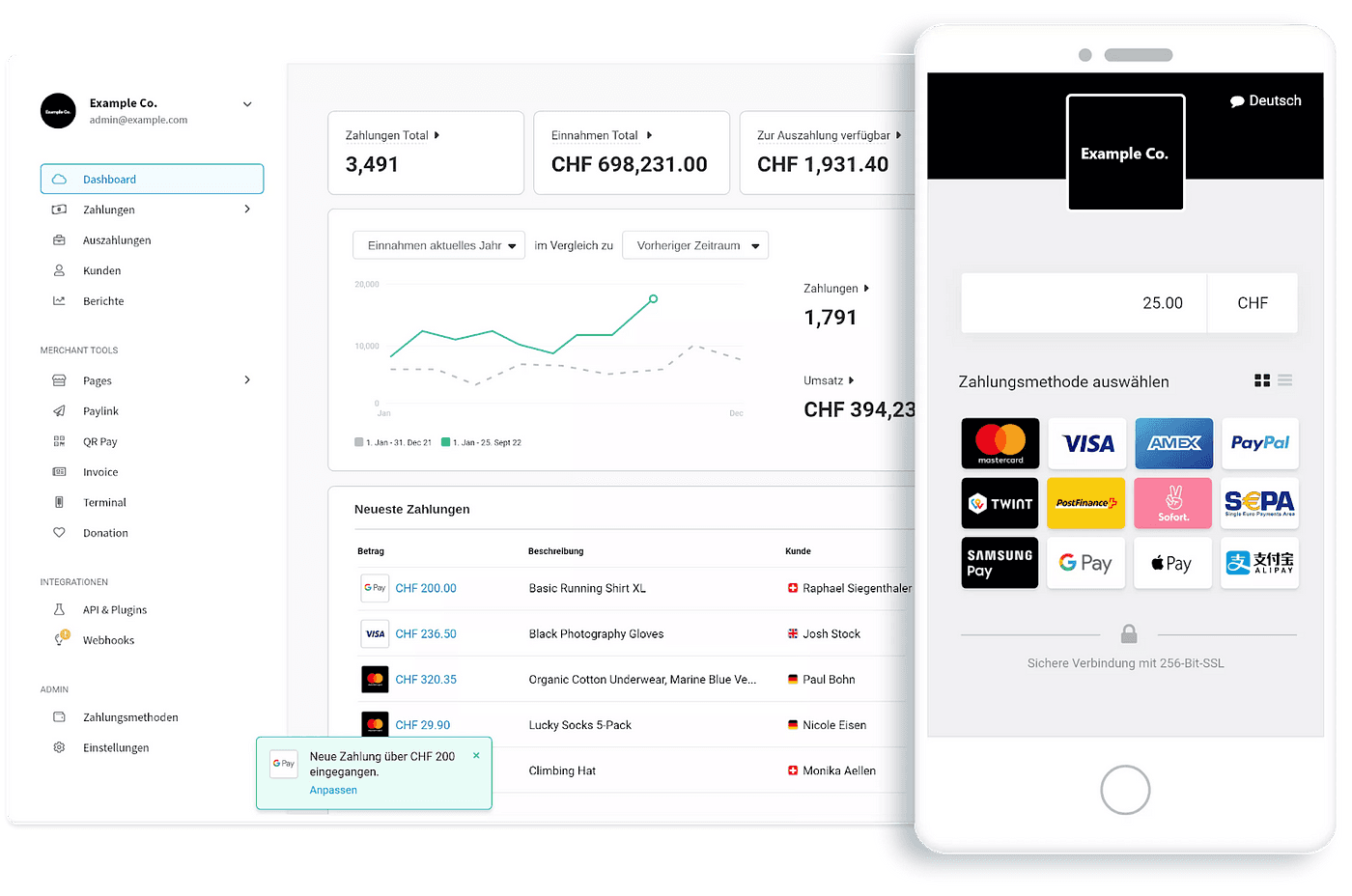
As one of the fastest-growing payment service providers in the German-speaking region, we are committed to providing our customers with the tools they need to achieve greater success in e-commerce. At Payrexx, you can expect advanced security features, all major payment methods such as TWINT, Mastercard, VISA, PostFinance, Apple Pay, Google Pay, Samsung Pay, Paypal, and QR bill from a single source. Also, an intuitive Dashboard with integrated e-commerce tools, as well as personal support and service for all stages of your business.
Learn more now about secure online payments with Payrexx.