
The future of online payments for SMEs
In a rapidly changing digital world, it can be challenging for SMEs to keep track of the latest trends in the online payment landscape. However, the importance of adaptability and anticipating customer needs cannot be overstated.
Fabrice
Knecht

Evolution of Online Payments for SMEs
The last few years have brought a drastic change in the world of online payments for SMEs. Just a decade ago, online payment options were limited for many smaller businesses. Often these solutions were expensive and complicated to implement. But thanks to technological advances and a changing business environment, that is different today.
In recent times, mobile payments and digital wallets like Apple Pay, Google Wallet, and PayPal have dominated the field. They offered SMEs the possibility to process payments more efficiently and quickly while enhancing security. Cloud-based solutions enabled companies to digitalize their businesses without significant upfront investments.
The future in online commerce - What does it look like?
Thanks to the increasing acceptance of Open Banking and API-integrated payment solutions, SMEs can now offer customized payment experiences. They are no longer dependent on traditional banks or expensive payment service providers. Furthermore, cryptocurrencies and blockchain, despite their volatility, have sparked a new debate about the future of money and payments.
The pandemic has further accelerated this change, as SMEs were forced to rethink their business models and seek more online sales opportunities. This has further underscored the importance of efficient, secure, and flexible online payment systems.
Overall, recent developments in the area of online payments have not only offered SMEs more opportunities and flexibility but have also increased consumer expectations for seamless, secure, and fast payment experiences.
Buy Now, Pay Later (BNPL) Options
The "Buy Now, Pay Later" (BNPL) trend has undoubtedly changed the way consumers pay for their online purchases. Instead of settling the total amount immediately, customers now have the option to split the amount. For example, TWINT recently introduced "TWINT pay later." This new way of shopping also impacts small and medium-sized enterprises (SMEs), which can often perceive an increase in average order values.
A major advantage of the BNPL trend for SMEs is that customers are more likely to buy more when they know they don't have to pay the full amount immediately. By being able to split the total amount, the purchasing process becomes more flexible and less restrictive. They feel encouraged to add higher-end products or additional items as they have the option to postpone the payment.
Moreover, the BNPL trend also increases consumers' trust in the purchasing process. By having the option to split the amount, customers feel financially relieved and more secure when making a purchase. This increased purchasing security leads to higher order values and thus to increased sales for SMEs.
Another advantage of the BNPL trend is the strengthening of SMEs' customer loyalty strategies. By offering customers the option to split the amount, SMEs can build a long-term relationship and develop a loyal customer base. Customers who have had positive experiences with BNPL are more willing to buy again and take advantage of this flexible payment method.
TWINT "Pay Later"
TWINT, a well-known mobile payment provider in Switzerland, has recognized the "Buy Now, Pay Later" (BNPL) trend and introduced its own option called "TWINT pay later." With this feature, customers can make purchases immediately but have the option to pay them at a later point. This not only offers consumers more financial freedom and flexibility but also increases the willingness to purchase as they don't have to pay the full amount immediately. "TWINT pay later" reflects the global shift in consumer preferences and shows how traditional payment methods adapt to modern needs.
Example: Companies like Klarna and Afterpay dominate the BNPL market. The ability to buy now and pay later has increased customer retention and trust. A shoe shop in Stuttgart reported that after introducing BNPL, customers not only bought more frequently but also added more expensive items to their cart.

Buy now - Pay Later
Contactless Payments
In a world where speed and efficiency are invaluable, contactless payments have become an indispensable component. They allow us to significantly reduce waiting time at the checkout while providing an additional security layer for customers and vendors. The possibility to make payments without physical card contact has brought enormous relief to everyday life. Long lines at the checkout are now a thing of the past.
Instead of rummaging through wallets or laboriously inserting cards, customers can simply use their contactless cards or smartphones to pay in a flash. This not only saves time but also reduces the stress and frustration often associated with paying.
Additionally, contactless payments provide an extra layer of security as neither the customer nor the vendor has to touch the physical card. This reduces the risk of fraudulent activities and enables a worry-free shopping experience. By using state-of-the-art technologies like NFC (Near Field Communication), payments can be conducted securely and conveniently with a simple touch.
The benefits of contactless payments go beyond speed and security. For Comerciante, the implementation of this payment method means a competitive advantage and improved customer service.
Example: After the global pandemic, a restaurant in Berlin began to offer contactless payments, significantly reducing the number of cash transactions. Customers praised the quick and hygienic payment process.
QR Code Payments
QR codes have become increasingly popular in recent years due to their user-friendliness and versatility. Unlike traditional barcodes, they do not require expensive machines or special devices. All that is needed to read and generate QR codes is a smartphone with a camera function. These characteristics make QR codes an extremely cost-effective option for small and medium-sized enterprises (SMEs).
Companies were once forced to procure expensive barcode scanners or special hardware to barcode their products or capture customer information. With QR codes, however, this is a thing of the past.
Thanks to easy handling, SMEs can now use QR codes to benefit in many ways from the advantages of this technology. They can, for example, place QR codes on their products to provide information such as product descriptions, instructions, or promotions.
Additionally, QR codes can also be utilized for customer loyalty programs. Companies can create QR codes that invite customers to register or participate in loyalty programs, contests, or discount campaigns. This allows SMEs to promote customer interactions, gather data, and expand their customer base without incurring high costs.
Example: A health food store in Cologne introduced QR code payments for customers who want to pre-order their products online and pick them up in the store. They could scan the QR code, pay, and take their products without waiting time.
Open Banking
Open Banking provides a comprehensive platform for financial service companies and external providers to effectively exchange and utilize banking information.
This innovative technology has the potential to fundamentally change the way financial products and services are offered. By disclosing banking information, customers are provided with a wide range of financial products and services that better meet their individual needs.
With Open Banking, customers can securely and seamlessly share their banking data with external providers to use personalized financial advice, budgeting tools, or comparison platforms, for example.
This means customers receive a more comprehensive overview of their financial situation and can make informed decisions. Additionally, Open Banking enables financial service companies and external providers to develop innovative solutions by accessing the extensive data base.
By accessing banking information, companies can improve their existing products and develop new, tailored offers.
For instance, lenders can make better lending decisions and offer financing solutions tailored to the customers' needs and possibilities, thanks to comprehensive insights into their financial situation.
Example: A FinTech start-up in Hamburg used Open Banking to offer SMEs tailored financial products based on their transaction history and financial behavior.
Digital Wallet Ecosystems
Digital wallets have evolved over the past years and now offer far more than just simple card information storage. They have developed into a complete ecosystem that provides a wide range of services for shopping, payment processing, and other financial transactions.
By integrating with various e-commerce platforms and payment providers, digital wallets enable users to have a seamless and convenient shopping experience.
Example: A start-up from Munich developed an app that allows customers not only to pay but also to track their expenses, share bills, and even make small investments. This led to an increase in user engagement and boosted recurring revenues.
Artificial Intelligence in Payment Processes
The financial sector is undergoing a revolution driven by Artificial Intelligence (AI). Particularly in the area of online payments, significant opportunities arise from the use of AI to improve the efficiency and security of transactions.
Thanks to advanced algorithms, payment processes can be analyzed in real-time to detect and prevent fraudulent activities. AI-based systems can identify suspicious patterns and unusual activities even before customers or Comerciante themselves become aware of them. This proactivity enables financial institutions to ward off fraud cases and ensure transaction security.
Another advantage of AI-supported solutions in the financial sector is the potential for improving customer service. AI-based chatbots can interact with customers in real time and immediately provide answers to frequently asked questions. This enables companies to optimize their customer service and handle customer inquiries more effectively.
Moreover, AI-supported chatbots can recognize complex inquiries and escalate them to human staff. In this way, customers can receive individual and personalized support, even if their question goes beyond the scope of an automated solution.
The future of the financial sector will undoubtedly be shaped by AI.
Example: An online shop in Leipzig integrated AI into its payment process and was able to reduce the fraud rate by 40%, while customer service became more efficient and customer-friendly.
Banking-as-a-Service (BaaS)
The world of financial services has experienced a revolution with the emergence of Banking-as-a-Service (BaaS). This innovative approach enables companies to create their own customized financial products without having to develop their own banking infrastructures from scratch.
The introduction of BaaS allows for a faster time to market, as companies can now rely on third-party platforms instead of building complex internal infrastructures. This significantly shortens the development time and enables companies to quickly respond to changing market conditions.
Thanks to third-party platforms, companies can also reduce costs. Developing and maintaining proprietary banking infrastructure requires considerable investments, both financial and temporal. By utilizing BaaS, companies can minimize these expenses and redirect resources to other business-critical areas.
Another advantage of BaaS is that companies are able to better meet specific customer needs. The flexibility and adaptability of BaaS platforms enable companies to develop innovative financial products tailored precisely to their customers' needs.
Example: A FinTech company from Frankfurt used BaaS to develop a mobile banking app specifically for freelancers within just a few months, integrating features like invoicing, payment tracking, and tax preparation.
Cryptocurrencies and Blockchain
Bitcoin and other cryptocurrencies have undoubtedly undergone a remarkable development. What was once considered a fringe phenomenon is now firmly part of the mainstream. More and more people are discovering the advantages of cryptocurrencies and recognizing their potential as an alternative to traditional payment methods.
One of the greatest benefits of cryptocurrencies is their decentralized nature.
Unlike conventional currencies controlled by a central bank or government, cryptocurrencies are supported by a network of computers. This means that no single entity has control over the system, which in turn enhances user trust. Transactions are recorded on a public ledger technology, the blockchain, ensuring unprecedented transparency.
Another advantage of cryptocurrencies is the often lower fees compared to traditional payment methods. Since no middlemen or banks are involved, transactions can be conducted cost-effectively and quickly. This makes cryptocurrencies attractive for businesses and individuals wanting to conduct cross-border payments.
It's clear that cryptocurrencies and the underlying blockchain technology represent a revolutionary change in the financial sector. More and more companies and even governments recognize the potential and are working to integrate this technology into their daily payment processing.
Example: A boutique hotel in Hamburg began accepting Bitcoin as a payment method. This not only attracted a new clientele of crypto enthusiasts but also allowed the hotel to process international payments without the usual bank fees.
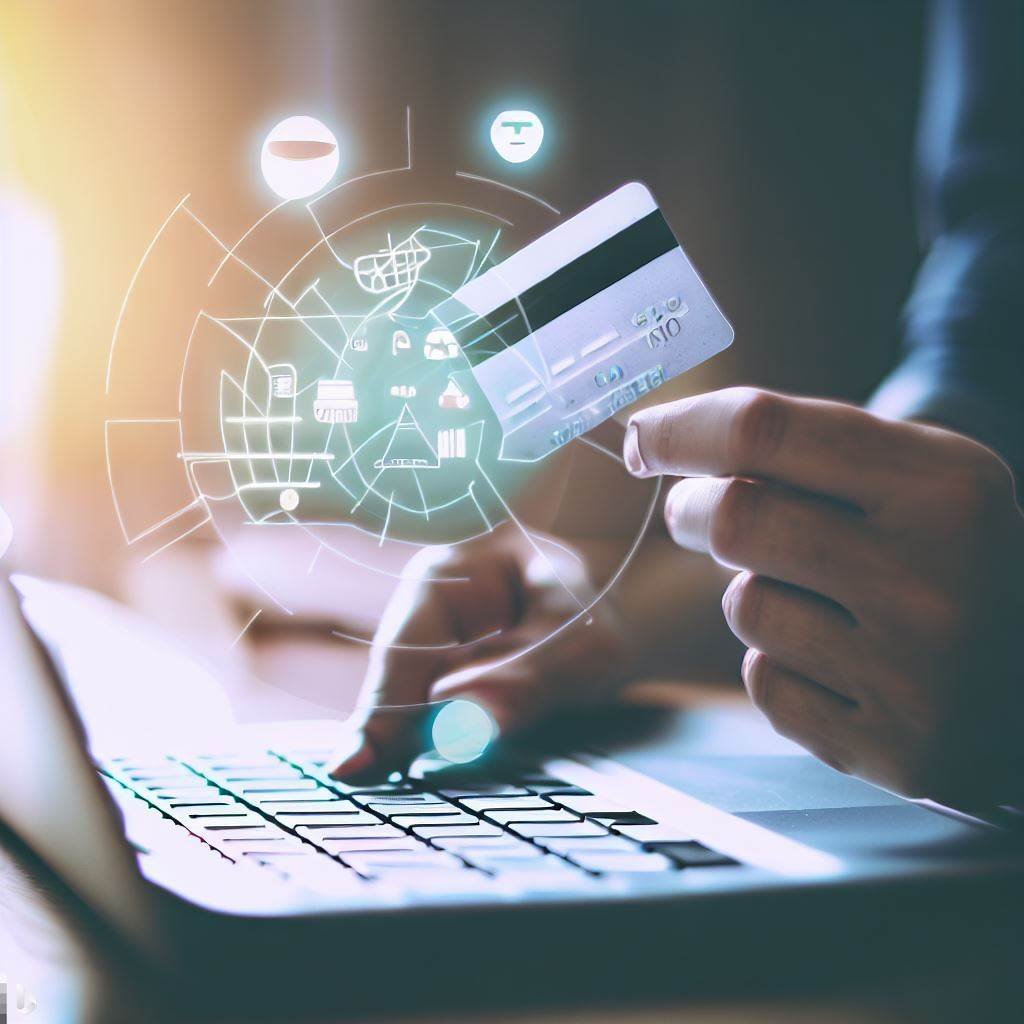
Digital progress never stops, and the pace of innovation in the area of online payments is very high. For SMEs, it is crucial to stay updated and take advantage of these developments. From AI to BaaS to cryptocurrencies – the possibilities for optimizing and diversifying payment processing are numerous and offer opportunities for growth and expansion in the digital economy. It's not just about keeping up with the competition but also about meeting and exceeding customer expectations.
The aforementioned trends are just some of the many developments expected in the coming years. By understanding and implementing these trends, SMEs can ensure they remain competitive.