
Card terminal for weekly markets and farm shops in Switzerland: Mobile devices, costs, and providers compared
Published:
Last updated (content):
Last updated (prices):
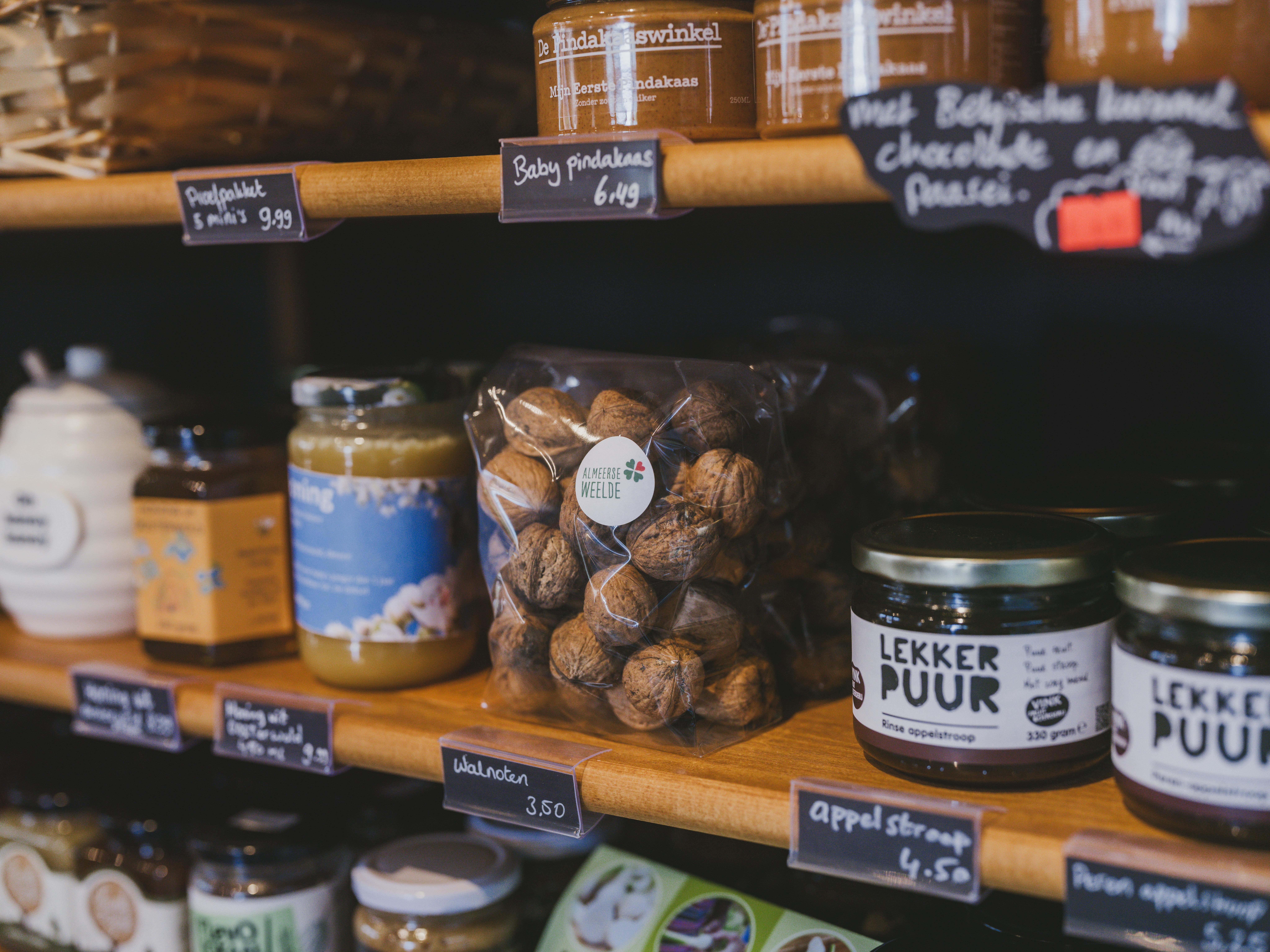
Anyone wishing to accept card payments at a Swiss weekly market or in a farm shop needs a mobile terminal that functions without a fixed power connection, supports TWINT and debit cards, and is still profitable with low average transaction values starting at EUR 8–15. The selection ranges from inexpensive Bluetooth card readers with no monthly costs to independent 4G terminals with receipt printers and TWINT integration. The decisive factor is not the device cost, but the transaction fees – as these accrue on every market day.
This guide compares the most important providers and device types for direct marketing in Switzerland, calculates the actual costs per market day, and shows what you need to look out for regarding battery, network, and weather.
1. When a mobile card terminal is worthwhile at a weekly market or farm shop
Not every market stall needs a card terminal. If you exclusively serve regular customers who all have TWINT, a QR sticker is sufficient. But as soon as one of the following scenarios applies, a physical terminal is worthwhile:
Firstly: Tourists and passers-by who do not have TWINT but want to pay with Visa or Mastercard. Especially at weekly markets in tourist regions (Zurich, Lucerne, Interlaken, Montreux), card payment is indispensable. Secondly: Higher amounts from EUR 30–50, for example with meat, cheese, or large bouquets of flowers, where cash becomes impractical. Thirdly: If you need receipts – for example, for business clients, restaurants, or resellers. And fourthly: If you also run a farm shop alongside the weekly market and have a fixed checkout situation there.
For pure self-service farm shops without staff, a QR code with a payment page is the better choice, because no one is operating the terminal. However, as soon as you are personally standing at the stall, a terminal is the more professional and faster solution.
2. Which card types your customers use at the weekly market and farm shop
In Switzerland, the card landscape has changed significantly in recent years. The most important development: Maestro has practically disappeared. Swiss banks have switched their debit cards to Visa Debit and Debit Mastercard. For market traders, this means: You need a terminal that accepts Visa and Mastercard – this covers both debit and credit cards.
The most common payment methods at Swiss market stalls
Visa Debit and Debit Mastercard are by far the most common cards. They have replaced Maestro and the old PostFinance Card (V Pay). In addition, there are credit cards (Visa, Mastercard, rarely AMEX), contactless Mobile Wallets (Apple Pay, Google Pay, Samsung Pay – processed through the terminal like a card payment), TWINT (via the terminal or in parallel via QR sticker), and of course still cash. A modern terminal accepts all of these payment methods via a single contactless interface (NFC): hold up the card, hold up the smartphone, done.
3. Device types at a glance: Stationary, mobile, with and without receipt
Three categories of devices are relevant on the market. Each has its own purpose.
Bluetooth card readers (smartphone-paired)
Example: SumUp Air. A small, inexpensive device (from approx. EUR 39) that is connected to your smartphone via Bluetooth. The transaction runs via the app on the mobile phone, the card reader is only the input device. Advantage: very cheap, no subscription. Disadvantage: You always need to have your smartphone with you, no separate screen, no receipt printer, no TWINT acceptance on the device.
Standalone mobile terminal (4G/Wi-Fi)
Examples: SumUp Solo, Payrexx Nexgo N86, Worldline Axium EX4000. These devices have their own screen, a built-in SIM card (4G), and function independently of the smartphone. Some models have an integrated receipt printer. Advantage: professional, fast, independent. Disadvantage: higher acquisition costs or rental fee.
All-in-one terminal (Android-based)
Example: Payrexx Nexgo N6. Android-based devices with a large touchscreen, receipt printer, and the ability to install additional apps (e.g., POS system, inventory management). Advantage: Combines terminal, checkout, and printer in one device. Disadvantage: Larger and heavier than a pure card reader, higher price.
4. Providers in comparison: Payrexx, SumUp, Worldline and Co.
The following table compares the most important providers of mobile card terminals in Switzerland – with a focus on the needs of market traders and farm shops.
Criterion | Payrexx | SumUp | Worldline | Nexi |
Device (Example) | Nexgo N6, Nexgo N86 | Air (BT), Solo (4G), Solo + Printer | Axium EX4000, EX8000, DX8000 | Various models |
Device costs | EUR 25/mo. rental (currently free) | From EUR 39 (Air) to EUR 152 (Terminal) – one-off purchase | Purchase or rental (approx. EUR 30–50/mo.), contract | Purchase or rental, individual offer |
Monthly fixed costs | From EUR 19/mo. (Standard plan, incl. API, plugins) | EUR 0 (Pay-as-you-go) or EUR 35/mo. (SumUp One) | Terminal rental + service fee if applicable | Terminal rental + service fee |
Debit card (Fee) | 0.95 % + EUR 0.15 | 1.50 % | Approx. 1.70 % (negotiable) | Approx. 1.35 % (negotiable) |
Credit card (Fee) | 1.25 % + EUR 0.15 | 2.50 % | Approx. 1.70–2.90 % (negotiable) | Approx. 1.35–2.50 % (negotiable) |
TWINT on terminal | Yes (1.25 % + EUR 0.00) | No | Yes (approx. 1.70 %) | Yes (approx. 1.35 %) |
Contractual obligation | None (monthly cancellable) | None | Often 12–36 months | Often 12–36 months |
Receipt printer | Yes (Nexgo N6, N86) | Only Solo + Printer (EUR 98+) or Terminal (EUR 152) | Yes (integrated on most models) | Yes (model dependent) |
Subscription plan required | Yes (Standard or Premium) | No | Contract with acquirer | Contract with acquirer |
The table shows: SumUp is the cheapest entry-level solution without fixed costs – but is only suitable if you do not need TWINT on the terminal and your card sales are under EUR 3,000 per month. As soon as TWINT on the terminal is important or volume increases, SumUp's transaction fees (1.5–2.5 %) become more expensive than the combination of a Payrexx subscription and lower fees (0.95–1.25 %). Worldline and Nexi offer the lowest negotiable fees, but require a contractual commitment and individual offers.
5. Costs per transaction: What actually accrues with small amounts
Direct marketing often means small amounts: EUR 6 for eggs, EUR 12 for honey, EUR 15 for vegetables. With such amounts, the fixed fees per transaction are more significant than the percentage. Let's calculate a concrete example.
Cost calculation: 12 market days per month, 80 transactions per day
Assumption: Average transaction value EUR 18, of which 60 % debit card, 30 % TWINT, 10 % credit card. This results in 960 transactions and EUR 17,280 in card sales per month.
Cost position | Payrexx (Standard) | SumUp (without sub) | Worldline (guide value) |
Monthly sub / Rental | EUR 19 (Standard plan) + EUR 0 (Terminal currently free) | EUR 0 | Approx. EUR 30–50 (Terminal) |
Debit cards (576 Tx at EUR 18) | EUR 184 (0.95 % + 0.15) | EUR 156 (1.50 %) | Approx. EUR 176 (1.70 %) |
TWINT (288 Tx at EUR 18) | EUR 65 (1.25 % + 0.00) | Not available | Approx. EUR 88 (1.70 %) |
Credit cards (96 Tx at EUR 18) | EUR 36 (1.25 % + 0.15) | EUR 43 (2.50 %) | Approx. EUR 29–50 (1.70–2.90 %) |
Total per month (approx.) | EUR 304 | EUR 199 (without TWINT!) | EUR 323–364 |
The calculation shows: SumUp appears cheaper at first glance, but does not offer TWINT on the terminal. If 30 % of your customers want to pay via TWINT, you lose these sales – or need a TWINT QR sticker in parallel. With Payrexx, everything is integrated into one device. Worldline is negotiable for high volumes and long contract terms, but only becomes worthwhile at significantly higher sales volumes.
Important: The fixed fee per transaction (e.g., EUR 0.15 with Payrexx) is significant with small amounts. For a carton of eggs for EUR 6, the fixed fee alone makes up 2.5 % – in addition to the percentage rate. For EUR 50 for cheese, the fixed fee is only 0.3 %. Farm shops with many very small amounts should check whether a pure QR solution (e.g., Payrexx QR Pay: 1.25 % + EUR 0.00) is more sensible for the cheapest items.
6. Battery, 4G, and weather: Practical requirements at the weekly market
Battery life
A market day typically lasts 6–10 hours. Most modern terminals manage 300–500 transactions per battery charge – which is sufficient for a full market day. According to the manufacturer, the Nexgo N86 lasts for over 500 transactions. The SumUp Solo manages around 100 contactless transactions in one go. Tip: Charge the device fully the night before and take a power bank with you to be on the safe side.
Mobile connection (4G)
Terminals with built-in SIM cards (4G) are ideal for weekly markets because they do not require Wi-Fi. The connection runs via the mobile network. On most Swiss weekly markets in towns, 4G coverage is good. It can be problematic at mountain markets, alpine events, or very remote farm shops. In these cases, only terminals with offline capability or a TWINT QR sticker (which uses the customer's mobile network) will work. Bluetooth card readers such as the SumUp Air use the smartphone's mobile network – which can be doubly problematic in the event of poor reception (mobile phone + terminal).
Weather and robustness
It sometimes rains at the weekly market. No commercially available card terminal is waterproof – so you need a protected place under the stall roof. Ensure you have a stable, elevated shelf for the device so that it does not fall into water or get wet. In cold winter weather, battery life can drop significantly (up to 30 % less in sub-zero temperatures). In summer, direct sunlight can make the screen unreadable – place the device in the shade.
7. TWINT on the terminal: How to accept TWINT via the card reader
TWINT is by far the most popular mobile payment method in Switzerland. In weekly markets and farm shops, it has already overtaken cash in many cases. There are two ways to accept TWINT at a market stall:
TWINT on the card terminal (integrated)
Some providers – including Payrexx, Worldline, and Nexi – integrate TWINT directly into the card terminal. Customers hold their smartphone to the terminal or scan a QR code displayed on the screen. The transaction runs through the same billing process as a card payment. Advantage: One device, one billing system, one Dashboard. With Payrexx, TWINT at the POS terminal costs 1.25 % + EUR 0.00 per transaction.
TWINT via QR sticker (parallel to the terminal)
Anyone using a terminal without TWINT integration (e.g., SumUp) can hang up a TWINT QR sticker at the stall in parallel. The TWINT payments then run separately via the TWINT channel, the card payments via the terminal. Disadvantage: Two separate systems, two separate statements, more effort in bookkeeping. If TWINT makes up a significant part of your transactions (30–50 % at many Swiss market stalls), an integrated solution is easier in the long run.
8. Checklist: The right card terminal for your weekly market or farm shop
Clarify whether you need TWINT on the terminal. If so, SumUp and other pure card readers are excluded.
Calculate your transaction volume: How many transactions per market day, what average transaction value? Only then can the actual monthly costs be compared.
Choose a 4G-enabled terminal if you do not have reliable Wi-Fi access at the market stall.
Check the battery life: Does one charge suffice for your market day (6–10 hours, 50–100 transactions)?
Receipt printer yes or no? Business clients and resellers often expect a receipt.
Check contract lock-in periods: For seasonal market traders (e.g., only April–October), a model without contract commitment is better.
Store the device weatherproof: There is no splash protection – place the terminal under the stall roof, on an elevated shelf.
TWINT QR sticker as an addition: Even with a terminal, an additional QR sticker is worthwhile for customers who want to pay directly via the TWINT app.
Prepare bookkeeping: Set up a transit account for card payments and book gross sales and fees separately.
Test: Put the terminal into operation on a market day and check reception, battery, and speed under real conditions.
If you are looking for a terminal with integrated TWINT acceptance and no contractual obligation, Payrexx offers the Nexgo terminals N6 and N86 for rent – currently both devices are available free of charge while stocks last. POS fees are 0.95 % + EUR 0.15 for debit cards, 1.25 % + EUR 0.15 for credit cards, and 1.25 % + EUR 0.00 for TWINT.
The terminal requires a Standard or Premium plan (from EUR 19/month). All payments – card, TWINT, online sales – run through one Dashboard and are paid out in bundled form to your bank account.
.
FAQ on card terminals for weekly markets and farm shops
What does a card terminal for the weekly market in Switzerland cost?
Depending on the provider, between EUR 0 and EUR 152 for the device. In addition, there are transaction fees of 0.95–2.50 % per payment and, with some providers, a monthly fee. Bluetooth card readers (e.g. SumUp Air) cost from EUR 39 without a subscription. Standalone 4G terminals cost EUR 89–152 (purchase) or EUR 0–25 per month (rental).
View detailed response
Can I also accept TWINT with SumUp?
No. In Switzerland, SumUp supports neither TWINT nor PostFinance. If you want to offer TWINT at the terminal, you need another provider or a separate TWINT QR sticker next to the SumUp device.
View detailed response
Do I need a contract for a card terminal?
Not necessarily. Providers like SumUp and Payrexx work without contract commitment – you can cancel monthly. Worldline and Nexi, on the other hand, often require contract terms of 12–36 months.
View detailed response
What has changed with the end of Maestro?
Maestro cards have been replaced by Visa Debit and Debit Mastercard. For market traders, this means: every terminal that accepts Visa and Mastercard automatically accepts the new debit cards as well. The fees for debit cards are lower than for credit cards.
View detailed response
How quickly will I receive the money in my bank account?
Payout periods vary: SumUp pays out in 1–2 business days, Payrexx offers weekly or weekly payouts, Worldline usually weekly or monthly. The payout is made as a net amount – transaction fees are already deducted.
View detailed response
Can I also use a card terminal for a single event only?
Yes. You purchase SumUp devices once and use them without a subscription – even for a single event. Payrexx terminals can be cancelled on a monthly basis. Worldline also offers daily rental models for events.
View detailed response
Does a card terminal also work without an internet connection?
For payment authorization, card terminals require a connection – either via 4G (built-in SIM) or Wi-Fi. Transactions cannot be processed without a network. Some terminals offer a limited offline function for very small amounts, but this is rarely used.
View detailed response