
Comparison of Swiss online payment providers for 2026
The search for the perfect payment provider for an online shop can be a real challenge, but it is invaluable. In this article, the nine most important payment providers (Payment Service Providers) for Swiss online shops are compared – namely Datatrans from Planet, PayPal, Payrexx, PostFinance, Stripe, wallee, Worldline, saldiaPay, and zahls.ch, to make the selection easier.
Melanie Frutiger
Frutiger
1. Online Payments: Understanding the Theory
To accept payments in an online shop, merchants need two contracts:
Acceptance Contract (Acquiring Contract): This is concluded with an acquirer (see Chapter 1.2).
Processing Contract: This is concluded with a Payment Service Provider (PSP) (see Chapter 1.1).
The following explains exactly what an acquirer and a Payment Service Provider are and how they interact with the online shop.
1.1 What is a Payment Service Provider?
A Payment Service Provider (also known as PSP) enables the technical integration of online payment methods such as Mastercard, TWINT, PostFinance, and Apple Pay into an online shop. Instead of negotiating with each financial institution individually and integrating the payment methods separately into their shop, online merchants (also Merchants) can work directly with a PSP. This allows them to obtain all desired payment methods, integration systems, and e-commerce tools from one provider and also meet the required security requirements.
The Processing Contract with the Payment Service Provider governs the technical processing of payments, namely the connection between the online shop, the Payment Service Provider, and the banks. In some cases, however, merchants also need an acceptance contract with an acquirer – unless the PSP itself takes over this role as a Payment Facilitator (see Chapter 1.3).
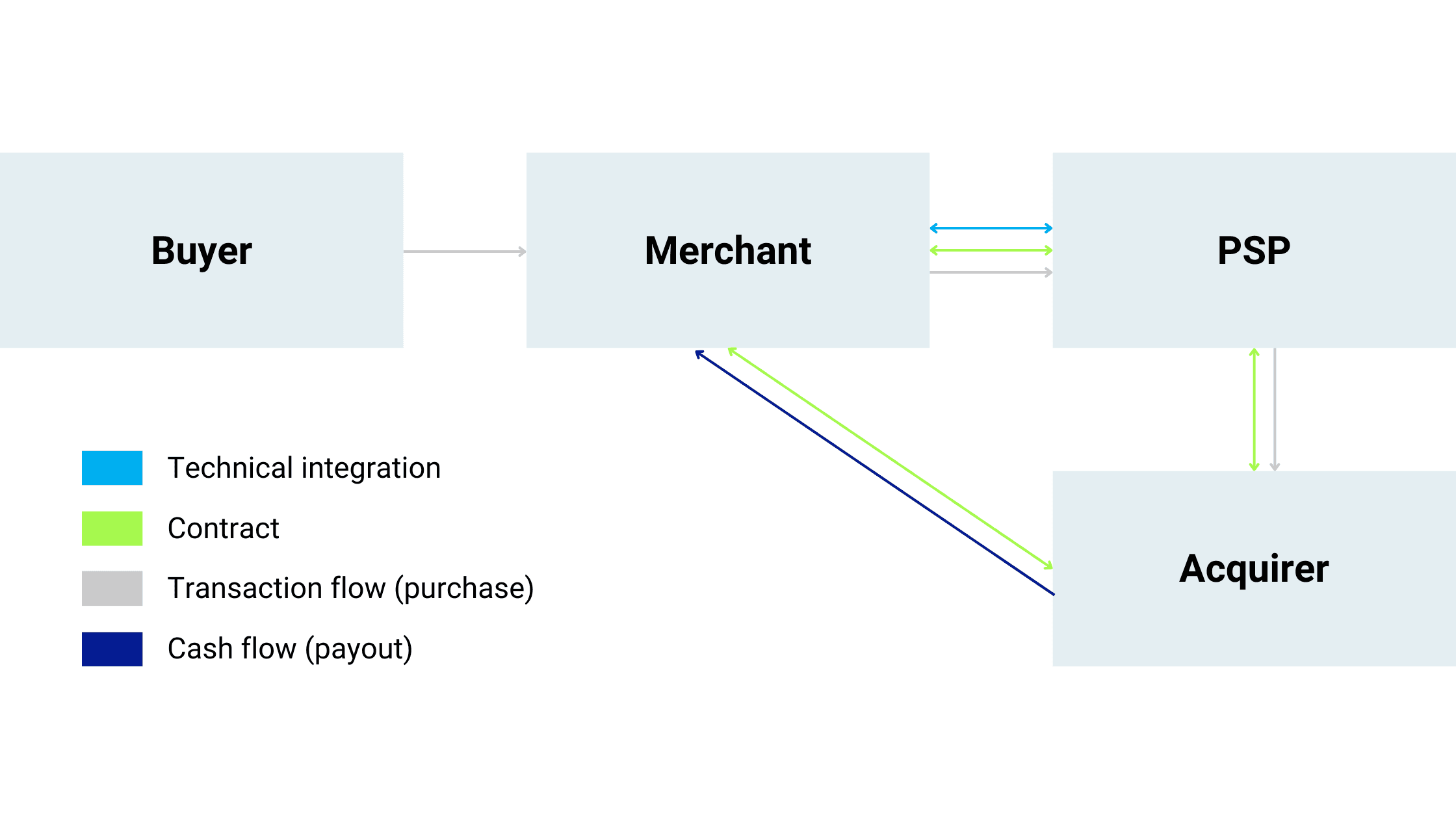
Figure 1) How a payment service provider (PSP) works
1.2 What are an Acquirer and an Acceptance Contract?
An acquirer (also known as an Acquiring Bank) is a financial institution that processes credit and debit card payments for merchants. For an online shop to accept such payments, it needs an Acceptance Contract. This regulates the acceptance and processing of card payments and sets fees, security requirements, and chargeback processes.
1.3 What is a Payment Facilitator?
A Payment Facilitator (also PF or Collecting PSP) simplifies payment processing for merchants by acting as an intermediary between them and the acquirer (see Figure 2). The Payment Facilitator can sign the acceptance contract on behalf of the acquirer. Merchants, in turn, conclude their contract directly with the Payment Facilitator and therefore do not need a separate acceptance contract with an acquirer.
Thus, the Payment Facilitator allows various payment methods from different acquirers to be integrated into an online shop with just one contract – for example, Visa, Mastercard, TWINT, PostFinance, and Reka.
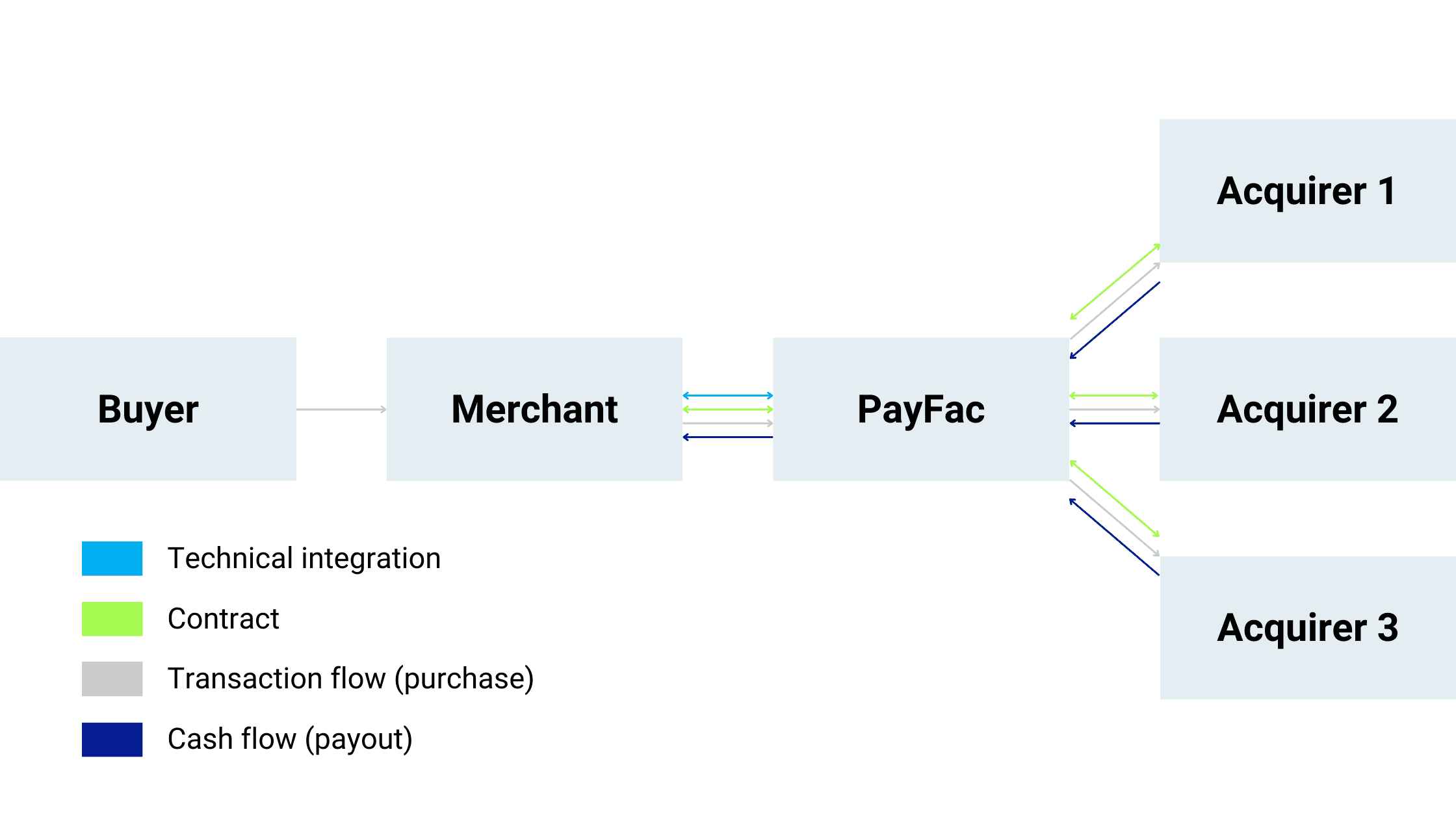
Figure 2) How a Payment Facilitator (PF) Works
Besides these two basic models, there are other hybrid forms, which are not further explained in this article.
2. How to Choose the Right Provider?
The choice of the right provider depends on several factors. Merchants should ask themselves the following questions:
Which payment methods do I want to offer? A wide variety of payment options increases customer satisfaction and conversion rates. Merchants should therefore consider which payment methods their customers prefer. Not all providers support the same payment methods – especially for nationally popular options like TWINT or PostFinance Pay, choosing the right provider is crucial.
Which shop system am I using? The technical integration of a Payment Service Provider can be facilitated by pre-made plugins¹. For popular systems like Shopify or WooCommerce, most providers offer ready-made plugins for easy integration. Flexible API solutions are available from some providers for custom-developed shops.
What tools do I need? The functionalities of a Payment Service Provider should match the requirements of the shop. While some providers offer specialized solutions for donation platforms or subscription-based business models, there are also all-in-one platforms that cover a wide range of business models.
What are the costs? In addition to transaction fees, any potential monthly fixed costs, setup fees, and additional costs for special features should also be considered. This helps to avoid unexpected expenses.
Which target audience am I addressing? Depending on the clientele, different payment methods are relevant – young consumers often expect wallet solutions, while companies or international clients benefit from fast and cost-effective alternatives like Instant Payment. Instant Payment (also Pay by Bank) enables direct bank transfers in real-time and particularly saves fees in international payments. Currently, Payrexx is the only provider in Switzerland offering Pay by Bank.
In addition to these functional and security-related aspects, merchants should especially consider easy and stable connectivity, a wide range of payment methods and tools, reliable customer support, and a cost-effective pricing model to avoid unnecessary expenses.
It is also advisable to choose a provider that additionally acts as an acquirer or Payment Facilitator. This way, merchants have a single point of contact for all payment processes.
¹ Extensions for shop systems that enable the integration of Payment Service Providers without programming.
3. Overview of the Functions of Individual Payment Providers
The following table shows which payment methods are supported by each provider. For better clarity, only the most common payment methods are considered. In addition, the table provides information on which providers offer plugins for common shop systems.
Some Payment Service Providers also offer their own, often very rudimentary shop systems, which allow a small online shop for products, vouchers, subscriptions, or donations to be created without programming knowledge. Such solutions are listed in the table as “e-commerce tools.”
To better assess customer satisfaction and service quality, the table also includes the Google ratings of all providers.
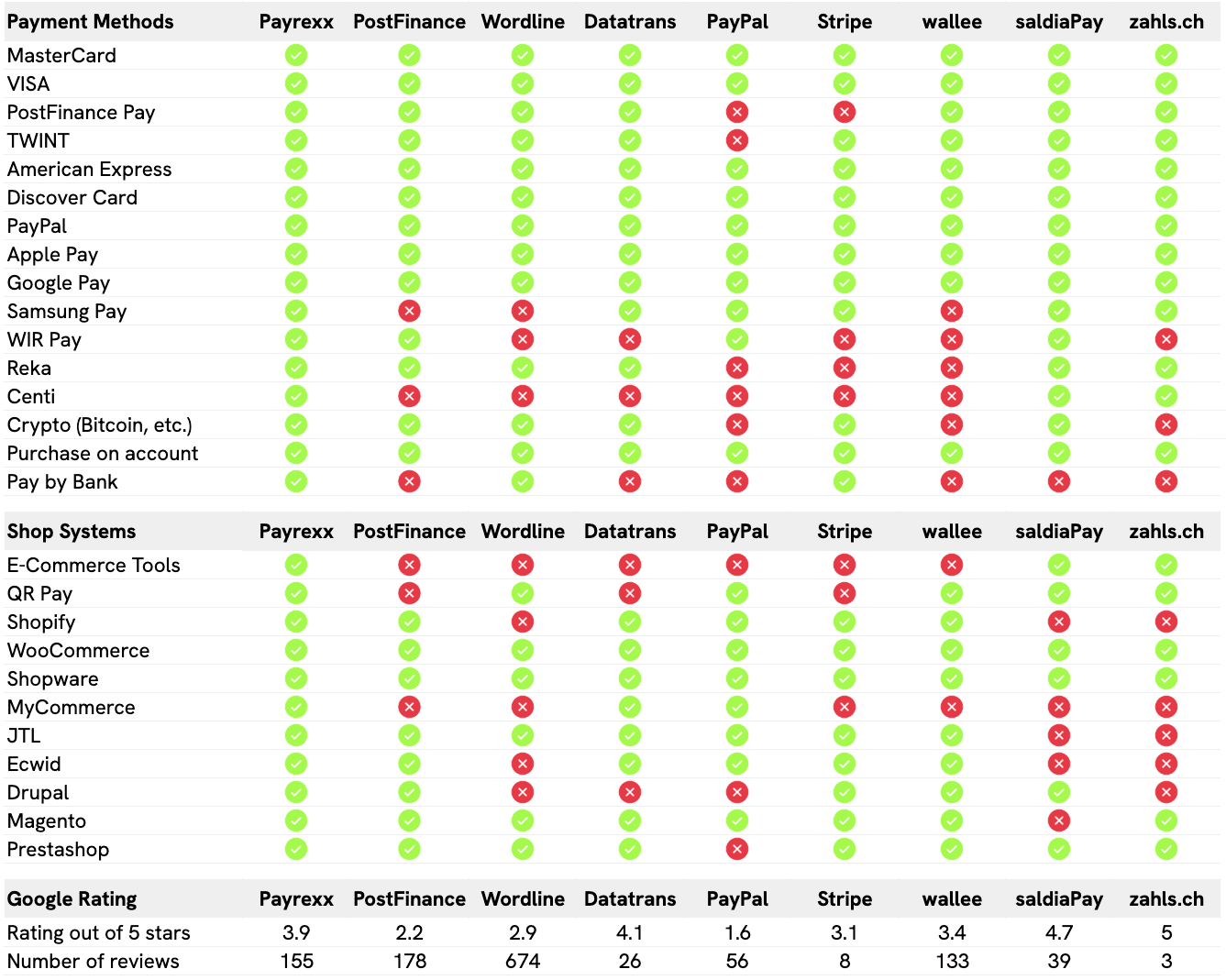
Figure 3) Functional matrix of the various payment providers
4. Cost Analysis
This section calculates the monthly costs (subscription and transaction fees) of different providers. The analysis is conducted for two exemplary online shops: one with a turnover of 20,000 CHF and another with 100,000 CHF.
For the calculation, the cheapest offers from each Payment Service Provider for the corresponding sales volume were selected. The fee details relate to transactions via Mastercard and Visa. The price information is from the websites of the respective Payment Service Providers². Any setup fees are not considered in the chart.
4.1 Online Shop with a Turnover of 20,000 CHF Per Month
The following cost analysis shows the monthly fees for smaller online shops with a sales volume of 20,000 CHF with 200 credit card transactions per month. The average value of a transaction is therefore 100 CHF per purchase.
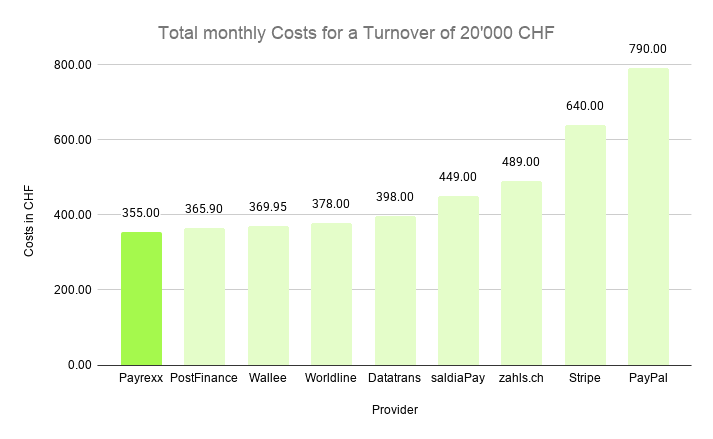
Figure 4) Monthly costs for revenue of CHF 20,000 (excluding setup)
² With Datatrans' offer, a separate acquiring contract must be concluded. The acquiring costs, therefore, depend on the choice of the acquirer, which is why a hypothetical value of 1.6 percent was used (average of all other providers).
A small online shop benefits from the lowest fees with Payrexx, closely followed by PostFinance. With costs of 790 CHF, PayPal is the most expensive for online shops with this volume. The price difference between Payrexx and PayPal is 435 CHF. Therefore, the costs of the cheapest Payment Service Provider, Payrexx, are more than 50 percent lower than those of the most expensive one.
Additionally, Payrexx offers exclusive discounts for startups and non-profit organizations: 30 percent for startups and 50 percent for non-profit organizations on all subscriptions.
4.2 Online Shop with a Turnover of 100,000 CHF Per Month
The next cost analysis shows the monthly fees for medium-sized online shops with a sales volume of 100,000 CHF and 1,000 credit card transactions per month. The average value of a transaction is therefore 100 CHF per purchase.
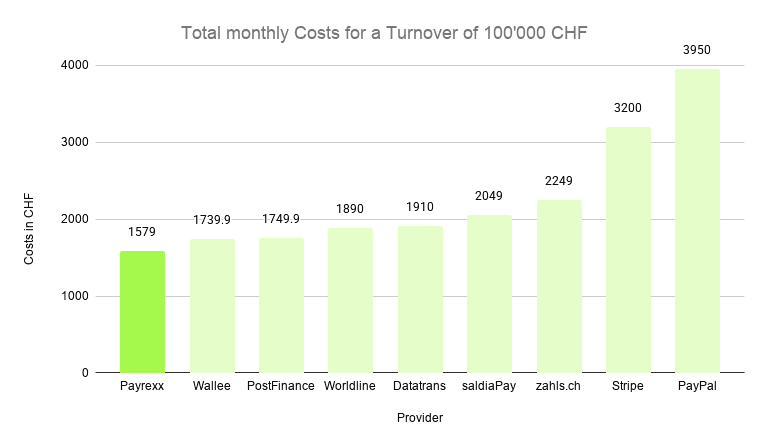
Figure 5) Monthly costs for revenue of CHF 100,000 (excluding setup)
With monthly costs of 1,579 CHF, Payrexx is the cheapest provider for medium-sized online shops, followed by wallee. Much more expensive than the others are PayPal and Stripe. The price difference between Payrexx and the most expensive provider is 2,371 CHF, which corresponds to a saving of over 60 percent.
No calculation was made for large online shops with a turnover of over 100,000 CHF per month. This is because many Payment Service Providers offer individual special conditions for larger clients – including Datatrans, Payrexx, Stripe, walee, Worldline, and zahls.ch.
5. All Payment Providers in Detail
5.1 Payrexx
Payrexx is a Swiss omnichannel Payment Provider and Facilitator that offers merchants a central platform to accept payment types like credit cards, TWINT, PostFinance Pay, Apple Pay, and Google Pay – without separate contracts with acquirers.
The provider stands out for its easy setup and free plugins for all common shop systems, like WooCommerce and Shopify. Furthermore, the platform offers a range of practical e-commerce tools, innovative solutions for in-store sales, and universal QR payment codes, allowing payments not only via TWINT but with all desired payment methods.
Payrexx impresses with low fees and discounts for startups and non-profit organizations. All functions of Payrexx can be tested for free for 30 days. The Google rating is 3.9 out of 5 stars from 155 reviews.
Advantages | Disadvantages |
|
|
5.1.1 Price Overview of Payrexx
Subscription | Setup Costs | Monthly Costs | Transaction Fees |
Free³ | - | 0 CHF | 2.5 % + 0.30 CHF |
Standard | - | 19 CHF | 1.65 % + 0.18 CHF |
Premium | - | 49 CHF | 1.35 % + 0.18 CHF |
³ No plugins or API connection included in the Free subscription of Payrexx.
5.1.2 Additional Notes
Thanks to its comprehensive offering, Payrexx provides an attractive solution aside from major, often expensive providers. The Swiss company is characterized by flexibility, personal support, and specialization in SME merchants. To register with this provider, merchants need a valid photo ID, an address verification document, and, if applicable, a commercial register entry. Registration before 4 p.m. ensures the same-day review.
5.2 PostFinance
PostFinance offers a payment solution specifically designed for the Swiss market, enabling companies to quickly and securely accept payments. The provider includes all common payment methods (PostFinance Pay, TWINT, Visa, and Mastercard) and also provides various free shop plugins for integration into well-known shop systems.
A highlight is the direct connection to the Swiss banking system and high customer acceptance, making the provider particularly suitable for companies mainly operating domestically.
PostFinance also offers a free 30-day trial in a simulation mode. The average Google rating is 2.2 out of 5 stars from 178 reviews.
Advantages | Disadvantages |
|
|
5.2.1 Price Overview of PostFinance
Subscription | Setup Costs | Monthly Costs | Transaction Fees |
Checkout All-in-One | 199 CHF | 14.90 CHF | 2.5 % |
E-Com Bundle | - | 19.90 CHF | 1.55 % + 0.18 CHF |
Checkout Flex | 249 CHF | 19.90 CHF | 1.55 % + 0.18 CHF |
5.2.2 Additional Notes
To use PostFinance, a company must be based in Switzerland or Liechtenstein and have a business account with PostFinance or a credit card for fee billing. Billing is in Swiss francs, but payouts can also be made in foreign currencies depending on the acceptance partner.
5.3 Worldline
Worldline provides both acquirer and Payment Service Provider services, thus usually offering its services in packages tailored to the specific application. With the Worldline e-commerce package, online shop payments can be accepted without monthly fixed costs.
As a global provider of payment solutions, Worldline stands out for its extensive experience and a comprehensive range of services. Especially for larger companies, the provider offers a scalable solution with a wide selection of payment methods. Worldline also specializes in dynamic currency conversion, enabling foreign customers to pay effortlessly in their own currency.
For easy integration, Worldline provides numerous free and paid plugins. Larger companies also benefit from additional services and extensive reporting tools. Worldline has an average Google rating of 2.9 out of 5 stars from a total of 674 reviews.
Advantages | Disadvantages |
|
|
5.3.1 Price Overview of Worldline
Subscription | Setup Costs | Monthly Costs | Transaction Fees |
Worldline e-Payments | - | - | 1.7 % + 0.19 CHF |
Worldline Pay By Link | - | - | 1.7 % + 0.19 CHF |
Worldline Web powered by Wix | - | 29 CHF | 1.7 % + 0.19 CHF |
5.3.2 Additional Notes
Medium and large enterprises as well as omnichannel solutions require an individual offer, which cannot be ordered online. To find the suitable package, it is recommended to contact the Worldline sales department directly.
5.4 Datatrans from Planet
Datatrans from Planet is an established Payment Service Provider that is particularly suitable for large companies and those with high transaction volumes. The platform offers a broad range of payment methods as well as free and paid plugins for shop systems like WooCommerce, Shopify, and Magento. Especially for companies with more complex needs, Datatrans provides a tailored solution.
A significant advantage of Datatrans is that the company handles the connection to an acquirer through a separate contract. This is an efficient and reliable solution, especially for companies with high transaction numbers. However, for smaller companies, this separate acquirer contract could be a hurdle, especially due to the financial overhead.
Once an acquirer contract is in place, a test account can also be created with Datatrans. The average Google rating of this provider is 4.1 out of 5 stars from 26 reviews.
Advantages | Disadvantages |
|
|
5.4.1 Price Overview of Datatrans
Subscription | Setup Costs | Monthly Costs | Transaction Fees |
Get Started | - | 20 CHF | 1.6 % + 0.29 CHF |
Scale Now | - | 125 CHF | 1.6 % + 0.29 CHF |
5.4.2 Additional Notes
Since Datatrans is neither an acquirer nor a Payment Facilitator, merchants require an additional acceptance contract with a separate acquirer. To account for this factor, a commission of 1.6 percent was used in this analysis. This is an assumed value derived from the average of the other providers. The transaction fee may vary depending on the selected acquirer.
5.5 PayPal
PayPal is a globally known, simple, and standardized solution for online merchants. The provider allows you to accept payments in various currencies and offers a high level of security, especially for international transactions.
With over 400 million users and wide acceptance, PayPal is particularly suitable for companies that want to target a large number of international clients. The platform supports a variety of payment methods, including credit cards, Apple Pay, Venmo, and many more. PayPal also offers some free plugins for common e-commerce systems like WooCommerce, Magento, and Shopware. Additionally, tools such as payment links, email invoices, and QR payments are available.
PayPal has an average Google rating of 1.6 out of 5 stars from a total of 56 reviews.
Advantages | Disadvantages |
|
|
5.5.1 Price Overview of PayPal
Subscription | Setup Costs | Monthly Costs | Transaction Fees |
PayPal | - | - | 3.4 % + 0.55 CHF |
5.5.2 Additional Notes
Setting up PayPal is very simple. Merchants only need to provide their business information and the trade register number. Large companies can also apply for special terms for a scalable solution at PayPal.
5.6 Stripe
Stripe is a well-known and flexible payment solution that is particularly aimed at developers requiring highly customizable payment processing. The provider supports numerous payment methods, including credit cards, Apple Pay, Google Pay, and various regional payment methods.
Stripe is suitable for both startups and larger companies with an international focus. The solution integrates seamlessly into common e-commerce platforms like WooCommerce and Shopify. Alongside numerous free plugins, Stripe also offers paid extensions.
The provider has a Google rating of 3.1 out of 5 stars from 8 reviews.
Advantages | Disadvantages |
|
|
5.6.1 Price Overview of Stripe
Subscription | Setup Costs | Monthly Costs | Transaction Fees |
Stripe | - | - | 2.9 % + 0.30 CHF |
5.6.2 Additional Notes
For implementing Stripe, merchants should have developer knowledge. Furthermore, a valid photo ID and trade register number are required for verification. For large companies, Stripe also offers special terms that can be requested from the sales team.
5.7 wallee
wallee is a Swiss omnichannel Payment Service Provider that enables seamless payment processing across various sales channels for merchants. The platform supports a wide range of payment methods, including credit cards, mobile wallets, and other local payment methods. wallee also offers both free and paid plugins for various shop systems.
wallee offers API integration. The modular architecture also allows companies to choose only the functions they really need. This flexibility makes this provider an excellent choice for medium to large companies with specific requirements for their payment solution.
Online merchants can thoroughly test wallee in the free trial mode. The platform is rated 3.4 out of 5 stars on Google based on 133 reviews.
Advantages | Disadvantages |
|
|
5.7.1 Price Overview of wallee
Subscription | Setup Costs | Monthly Costs | Transaction Fees |
Basic | - | 19.95 CHF | 1.55 % + 0.20 CHF |
Business | - | 69.90 CHF | 1.55 % + 0.12 CHF |
5.7.2 Additional Notes
To use one of wallee’s many integrations, merchants usually need to perform some technical steps. This includes setting up a wallee plugin for their shop system or directly connecting via the API.
5.8 saldiaPay
saldiaPay is an innovative Swiss Payment Service Provider that enables online payments through a unified platform. Here, merchants can accept payments via credit cards, TWINT, PostFinance, and many other methods.
A unique feature of saldiaPay are the “saldiaApps” – integrations for various solutions like accounting, online shops, or logistics services. For merchants without their own webshop, saldiaPay also offers its own shop system “saldiaShop,” allowing easy webshop creation.
saldiaPay also provides free plugins for popular shop systems like WooCommerce and Shopware. All platform features can be tested for free for 30 days. saldiaPay has an average Google rating of 4.7 out of 5 stars from a total of 39 reviews.
Advantages | Disadvantages |
|
|
5.8.1 Price Overview of saldiaPay
Subscription | Setup Costs | Monthly Costs | Transaction Fees |
Easy | - | 5 CHF | 3.5 % + 0.30 CHF |
Advanced | - | 15 CHF | 2.5 % + 0.30 CHF |
Enterprise | - | 49 CHF | 1.7 % + 0.30 CHF |
5.8.2 Additional Notes
In addition to the wide range of integrated plugins and shop systems, saldiaPay offers many other webshop integrations on request. For registration, merchants need a photo ID and, if available, a commercial register entry.
5.9 zahls.ch
zahls.ch is a Swiss Payment Service Provider known for its particularly transparent and simple price structure. With zahls.ch, merchants can accept a wide variety of payment methods, including TWINT, PostFinance, and credit cards.
In addition to classic payments, zahls.ch's offering also includes e-commerce tools, such as an online terminal, payment links, digital invoices, or a self-configurable payment page (small online shop). This Payment Service Provider also offers free plugins for the most popular shop systems and scores with easy setup and integration.
zahls.ch enjoys an average rating of 5 out of 5 stars but has only been reviewed three times on Google.
Advantages | Disadvantages |
|
|
5.9.1 Price Overview of zahls.ch
Subscription | Setup Costs | Monthly Costs | Transaction Fees |
Beginner | - | - | 2.9 % + 0.30 CHF |
Advanced | - | 15 CHF | 2.6 % + 0.30 CHF |
Professional | - | 29 CHF | 2.3 % + 0.25 CHF |
Expert | - | 49 CHF | 2.0 % + 0.20 CHF |
5.9.2 Additional Notes
With the integrated tools from zahls.ch, merchants can easily create their own online shop or connect the provider directly to their existing online shop. For the verification process, a valid photo ID and, if available, the commercial register entry, are required.
Conclusion: Which is the Right Payment Provider?
Before online merchants decide on a Payment Service Provider, they should precisely define the individual requirements of their online shop. Besides costs, the range of functions, supported shop systems, and the offered payment methods play a decisive role.
For young, digital companies, Payrexx may be an exciting option. As an all-in-one payment solution, Payrexx is compatible with all common shop systems and is also the cheapest provider – followed by PostFinance and wallee. PayPal and Stripe, on the other hand, have higher transaction fees, and Datatrans incurs high monthly costs. To find the best solution, all providers offer a free trial period.
Almost all providers offer plugins for popular shop systems like WooCommerce, Shopware, or Shopify. While plugins are free with Payrexx, PostFinance, PayPal, and Stripe, additional costs may apply with Worldline, Datatrans, and wallee. With saldiaPay and zahls.ch, plugins are often only available on request.
Another important point is the selection of payment methods. While all providers offer a wide range of payment options, the difference often lies in the support of regional payment methods like TWINT, PostFinance, Reka, and Co. Here, Swiss providers like Payrexx, Datatrans, saldiaPay, or zahls.ch have an advantage. However, global providers like PayPal or Stripe benefit those with many international clients.
In terms of easy integration, PayPal, Payrexx, and zahls.ch are particularly convincing, while Stripe, Worldline, and Datatrans score with more customization options. Since setting up some providers requires a high level of technical know-how, this should also be considered when making the choice.
In summary, it is worthwhile to consider newer and lesser-known providers. They often offer equally powerful and cost-effective payment solutions and can also better address the individual needs of the merchants. For small and medium-sized shops, Payrexx and wallee are a good choice, while established providers might be more advantageous for larger companies. In terms of price, range of features, and user-friendliness, Payrexx is clearly among the front-runners.
Sources
Prices
Datatrans from Planet, PayPal, Payrexx, PostFinance, Stripe, wallee, Worldline, saldiaPay, zahls.ch
Plugins for Shop Systems
Datatrans from Planet, PayPal, Payrexx, PostFinance, Stripe, wallee, Worldline, saldiaPay, zahls.ch
Payment Methods
Datatrans from Planet, PayPal, Payrexx, PostFinance, Stripe, wallee, Worldline, saldiaPay, zahls.ch
Legal
We assume no liability for the correctness, completeness, timeliness, or quality of the data and information provided in this comparison article. It is especially important for online merchants to obtain information about prices and any additional costs directly from the respective providers. Some providers also have other unofficial offers and conditions that are not visible on the websites.
We expressly reserve the right to change the data or our entire offer available in this comparison article at any time without separate announcement. We are also entitled to supplement, delete or temporarily or permanently cease publication of this comparison article at any time.
Status: February 2026.
Contact Information
Author: Melanie Frutiger, Payrexx AG
Email Address: melanie.frutiger@payrexx.com