
6 AI tools in e-commerce: Which technologies propel merchants forward
The world of e-commerce is changing rapidly – and artificial intelligence (AI) is playing an increasingly important role. From personalized shopping experiences to automated customer service and fraud prevention: AI technologies are helping online merchants to work more efficiently, saving valuable time in many ways.
Linda
Rajan

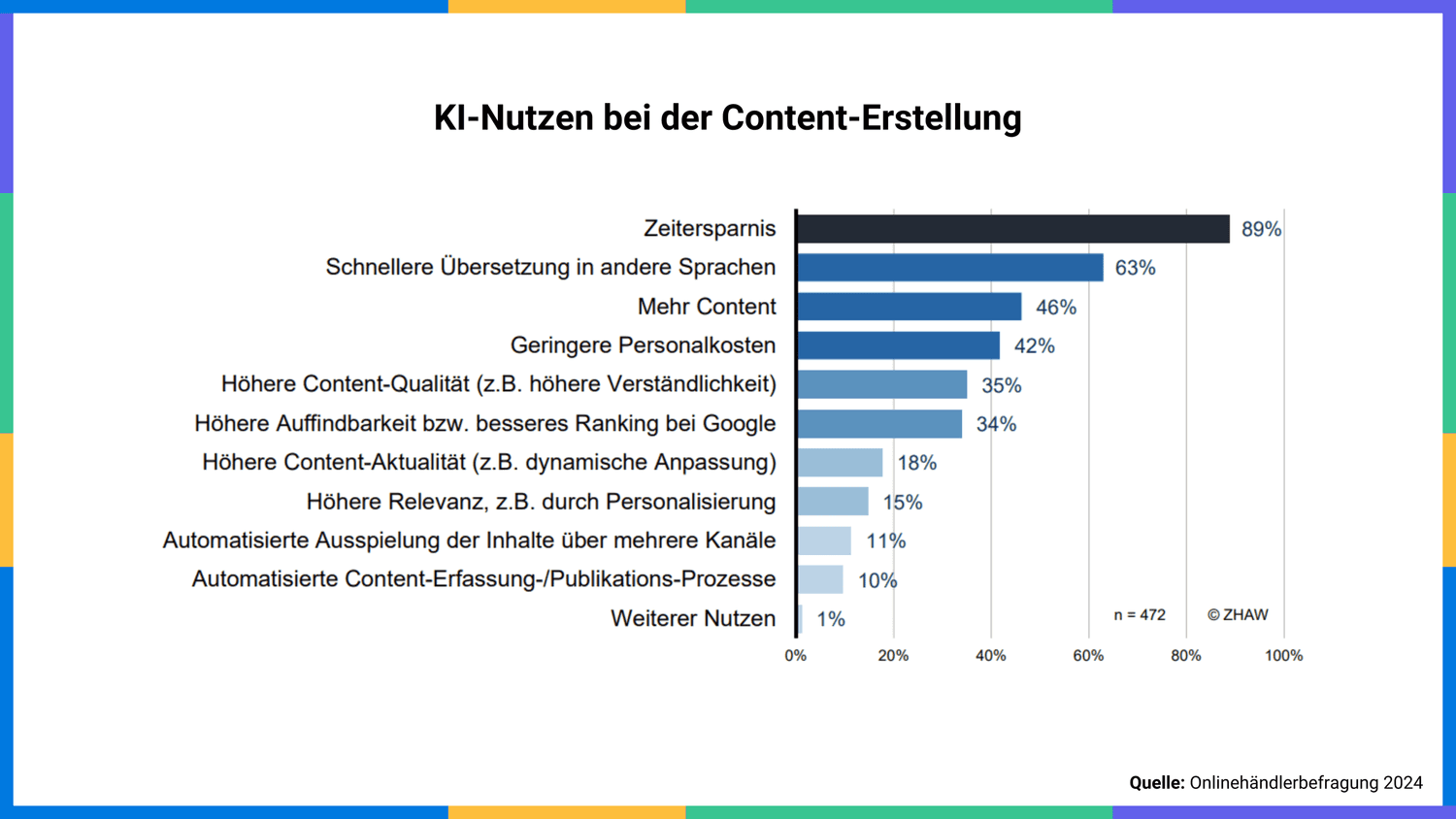
According to the Online Retailer Survey 2024 by the Zurich University of Applied Sciences (ZHAW) and the University of Applied Sciences Northwestern Switzerland (FHNW), more than half of the surveyed retailers already use AI tools like ChatGPT or DeepL. These support them in creating text content faster and translating it into other languages. According to the retailers, this not only saves time but also (personnel) costs.
If you want to study the Online Retailer Survey 2024 in detail, you can download it here.
The study clearly shows: AI is becoming increasingly important in e-commerce. However, many retailers find it difficult to keep track of the continuous developments and possibilities in this area. Often they do not know where and with which tools to start. The following article is intended to show you which AI tools could help you as an online retailer and what to pay attention to.
AI for Content Creation and SEO
High-quality texts are crucial for the success of an online shop. However, creating convincing content can be time-consuming. AI-supported tools like ChatGPT, Writesonic or NeuronWriter help retailers generate appealing product descriptions, blog articles, or marketing texts in no time.
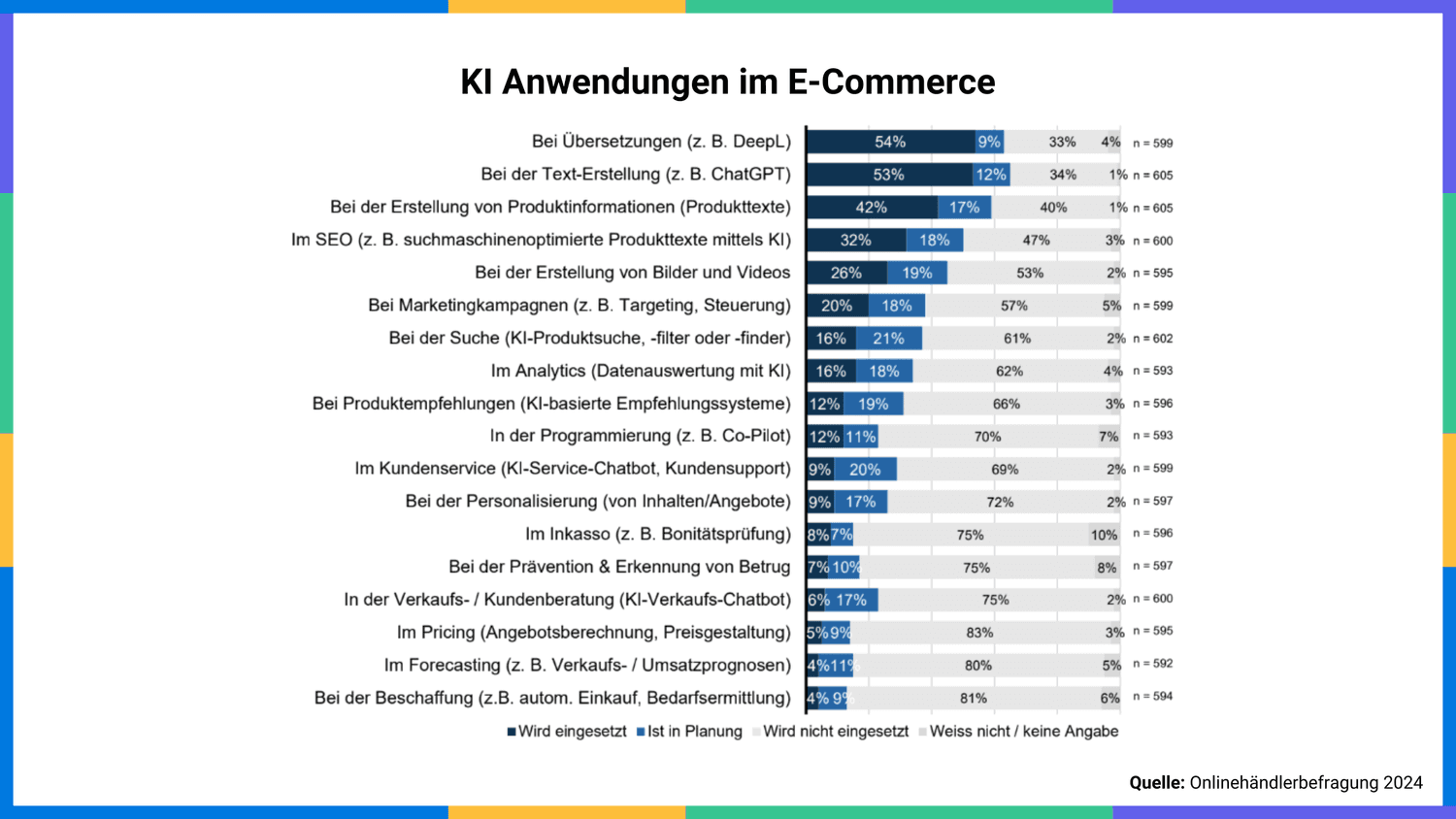
Also, the retailers participating in the Online Retailer Survey see the potential of AI tools in this area: Already a third of respondents use AI for SEO, specifically to optimize product texts and keywords for search engines (Google, Bing). With 46 percent mentions, AI is seen as a valuable tool for content creation in marketing, especially for SMEs with limited resources.
Another 35 percent of online retailers confirm that AI-supported tools generate understandable and qualitatively better texts than humans. Additionally, many use AI for idea generation, inspiration, and research.
TIP: Even if AI texts can be of high quality, human post-editing is recommended. Especially when it comes to emotional texts or those in a special, particularly creative writing style, AI tools do not yet deliver the desired results. In such cases, it might be worth engaging professional writers or content specialists.
AI for Design and Visual Content
A professional and appealing design is essential for a successful online shop and a strong social media presence. According to the Online Retailer Survey, one in four online retailers uses AI to create images and videos.
AI tools like DALL·E, Canva AI or Adobe Sensei support retailers in creating product images, banners, color schemes, layout suggestions, or other visual content. This allows designs to be generated quickly and efficiently. Particularly for small companies with limited budgets, such tools are helpful.
TIP: Use AI as support, but do not rely blindly on it. Sometimes AI can deliver quirky results, like distorted faces or six fingers on one hand. Therefore, it is worth reviewing the generated designs with the human eye to verify and ensure they match the brand identity. Many users can now recognize AI-generated images and may rate them negatively. In certain cases, it is still advisable to rely on authentic photography.

AI for Customer Service and Support
Chatbots are indispensable in online commerce today. Already 9 percent of the surveyed retailers stated that they use AI for customer service, while 20 percent plan to do so in the future. Some report that they have been able to improve customer satisfaction through AI-supported systems.
AI-supported chatbots can answer standard customer inquiries around the clock, relieving support. And tools like NICE, Zendesk AI, ChatGPT or the AI chatbot from Jotform can not only help customers but also partially implement targeted upsell strategies.
TIP: AI can learn from interactions and continuously improve its responses. Therefore, chatbots can sensibly complement the support offer. At the same time, they do not replace the personal conversation with a human being. Ensure that your customers can always have the option to contact a real person alternatively via phone, email, or live chat.

AI for Displaying Personalized Products
A shop that knows exactly what customers are interested in? Thanks to AI-supported algorithms, this is no longer a vision for the future. Certain tools can analyze user behavior by evaluating clicks, search queries, and previous purchases. Based on this data, personalized product recommendations are played out on the website.
According to the Online Retailer Survey 2024, 16 percent of e-commerce retailers already rely on AI-supported product searches, filters, or recommendations to improve the shopping experience. Retailers from various industries reported that AI helps them identify patterns in buying habits, engage in targeted cross- and upselling, and use their teams more efficiently.
Tools like Dynamic Yield, Algolia or Releva.nz ensure that customers see the right products at the right time. Releva.nz, for example, uses AI for dynamic retargeting and specifically shows users ads for products they have already viewed to increase the likelihood of purchase.
TIP: These tools should be used with care. If recommendations appear too precise or ubiquitous, customers may quickly feel monitored. Additionally, there are strict data protection regulations in many regions that you must comply with as a retailer. A transparent explanation on your website, for example, through a notice banner or a separate info page, can build trust. Also, offer the possibility to reject personalized suggestions or manage data themselves.
AI for Fraud Prevention and Security
Fraud attempts in online commerce have become a serious problem. Fake orders, stolen credit cards, and identity theft can cause significant financial damage. AI-supported security systems analyze transaction patterns in real-time and can detect suspicious activities before any damage occurs, thus preventing potential fraud cases. About 7 percent of respondents stated that they are already using AI in prevention and fraud detection.
German tools like sosafe and English ones like Signifyd, Fraud.net or Riskified use AI algorithms to automatically block unusual orders or request additional verification. For retailers, this means more security and fewer losses. Customers also benefit from better data protection.
TIP: It's best to rely on a combination of AI and manual control. While algorithms detect suspicious activities, a human eye can better distinguish between real customer behavior and false alarms.
AI for Pricing
Dynamic pricing means that prices are automatically adjusted based on supply, demand, competitive prices, or inventory. Companies like Migrol are already using AI tools from A2i to control their fuel prices. This is now also possible for e-commerce retailers: With tools like Prisync or BlackCurve, retailers can apply similar strategies to keep their prices flexible and competitive.
According to the Online Retailer Survey 2024, Swiss retailers are still cautious about using such tools. Only 4 percent have indicated that they are already using this option.
TIP: The advantages of AI-controlled pricing lie clearly in potentially better margins and higher competitiveness. However, if many retailers use such pricing algorithms, this could lead to rising prices. This aspect should be kept in mind when using such tools. Frequent price fluctuations could also irritate or make customers suspicious. Therefore, test the strategies first with a few products before using them in the long term.

Payrexx: Modern Payment Solution for You as a Retailer
Even without the help of artificial intelligence, a secure payment process is possible. Payrexx offers a simple and innovative solution for payments in e-commerce. The platform enables online retailers to integrate various payment methods and make the payment process seamless for customers.
The new AI search function in the support documentation helps you find answers to your questions faster and more targeted. In addition, with Payrexx, you can easily export transaction data and use AI tools like ChatGPT to analyze which payment methods your customers prefer. This way, you can optimize your offer and reduce cart abandonment.
TIP: With Payrexx, you have all common payment methods available for your customers in one account. Test all tools and functions of Payrexx free for 30 days and convince yourself!