
Social Commerce: Just hype or a real revenue driver for Swiss retailers?
The integration of e-commerce functions into social media is more than just a trend; it is a change in the way we discover products. But what does the reality look like for Swiss online retailers in 2026? Is it worth the investment for you? We take a look at the current figures.
16 Jan 2026
Linda
Rajan

What is Social Commerce?
Which platforms suit you?
Benefits for online retailers
Challenges and best practices
Users spend several hours daily on Instagram, TikTok, Pinterest, and similar platforms. It's only logical that companies want to use these platforms to sell their products directly to their target audience. This is where Social Commerce comes into play: This sales practice aims to bridge the gap between inspiration ("Oh, I want that!") and purchase ("Ordered!").
The Online Retailer Survey 2025 provides an interesting insight into this: While digital marketplaces are growing, Social Commerce has stabilized at a steady level in Switzerland. What does this mean for your sales strategy as an online retailer?
If you want to study the Online Retailer Survey in detail, you can download it here.
1. What is Social Commerce?
Perhaps you have heard the term before but are not sure what it's all about. Simply put, Social Commerce refers to the sale of products and services directly via social media platforms like Instagram or Facebook.
In contrast to classic social media marketing, where you "only" direct customers to your online shop via a link, the shopping experience merges with social interaction here.
The three core features of Social Commerce are:
In-app purchase processing: Customers can purchase products directly through a shop tab, clickable product tags in images and videos, or via live shopping functions.
Personalization: The platforms' algorithms analyze user behavior and suggest products that might suit them.
Social interaction: Purchase decisions are directly influenced by likes, comments, recommendations from friends, the community, or influencers.
The role of Social Commerce in Switzerland
For a long time, Social Commerce was seen as the great "online shop killer." However, the Online Retailer Survey 2025 shows that Social Commerce (still) does not replace a web shop but mainly complements it.
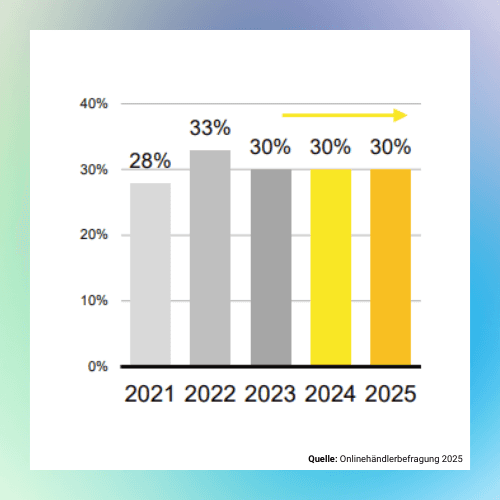
Development of the sales relevance of Social Commerce
Since 2022, the sales relevance of Social Commerce has consistently been around 30 percent. This means that while this channel is considered important by a third of Swiss retailers, noticeable growth has not occurred. Social Commerce is established, but its full potential has not yet been fully realized in Switzerland.
The main reason is likely the lack of platform features. Many features that make Social Commerce so successful abroad are still not available in Switzerland. For example, the TikTok shop was introduced in many EU countries at the beginning of 2025, whereas entry into the Swiss market has not yet happened (as of January 2026).
In the USA and parts of Asia, the entire purchase process often takes place within the social media app (in-app checkout). In Switzerland, however, this option is no longer available since the Instagram shop tab was discontinued in mid-2023. Today, retailers can only link their shop in the profile. Consequently, Instagram and Facebook are primarily used by Swiss retailers as digital showcases: Inspiration arises on social media, and purchases and payments are then completed in your online shop.
This does not make Social Commerce any less valuable but only changes its role. Instead of functioning as a direct sales channel, in Switzerland, it mainly acts as a powerful marketing and inspiration tool to boost your sales in the online shop.
2. Which platforms suit you?
Each platform offers you different tools to showcase your products. Here you get an overview of the possibilities (as of December 2025):
Linking the shop in the profile, live shopping (limited), product catalog (ads), shoppable posts and stories, product tagging, shop the look
Linking the shop in the profile, product catalog (profile & ads), marketplace integration (Marketplace)
Product pins, shop the look, visual search
TikTok
TikTok shop (regionally limited), live shopping, product links in videos
YouTube
Live shopping (limited), product links in video descriptions (often affiliate links)
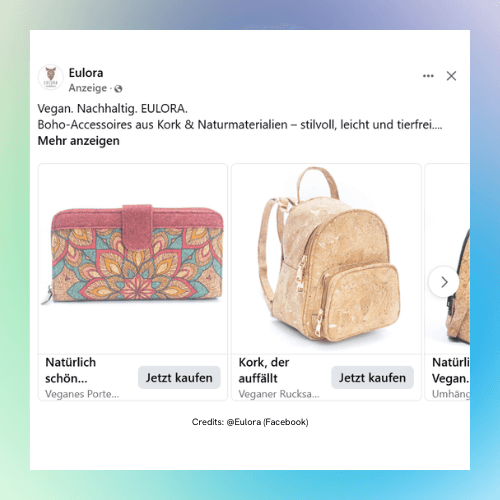
Product catalog: The digital showcase
On Facebook and Instagram (Meta), you have the opportunity to create a product catalog. It serves as a showcase on your profile and can be used for your ads. On Instagram, you can only use the catalog for ads. The actual purchase takes place on both channels in your online shop.
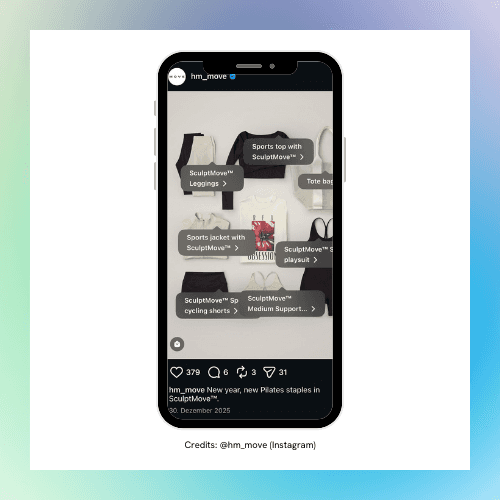
Shoppable posts and product tags: The interactive price tag
On Instagram and Pinterest, you can attach small tags to your product photos. The big advantage is that your products can be linked directly on the image. When your customers click on a tag, they are immediately redirected to the appropriate product page in your web shop.
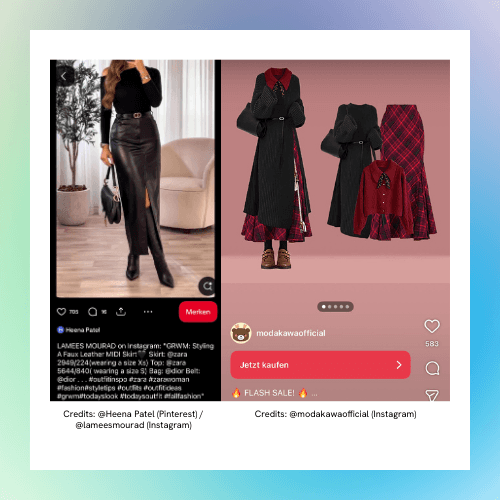
Shop the look: The digital fashion magazine
“Shop the Look” is similar to shoppable posts but goes a step further: Here, not only various individual pieces but an entire outfit or a fully furnished room are displayed. All visible items in the image are directly or caption-linked. A click on the respective product leads directly to the shop. This function is particularly popular on Pinterest.

Live shopping: Teleshopping 2.0
Remember the classic shopping channels on TV? Live shopping works just like that but more interactively. A person (e.g., an influencer or retailer) presents products in the livestream, tries them out, or demonstrates them. Viewers can ask questions live and buy the shown product with a click while the show is running. This feature is currently fully available only in the TikTok shop.
Product links in videos: The digital shortcut
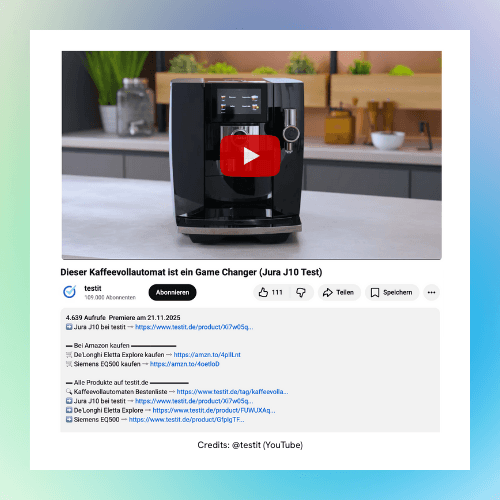
This format is particularly popular on TikTok and YouTube: Someone presents a product in a video, like a new coffee machine. Instead of viewers having to google the name laboriously, a link pops up directly in the video or description. A click on it brings customers to checkout or the product page as quickly as possible.
Platform relevance
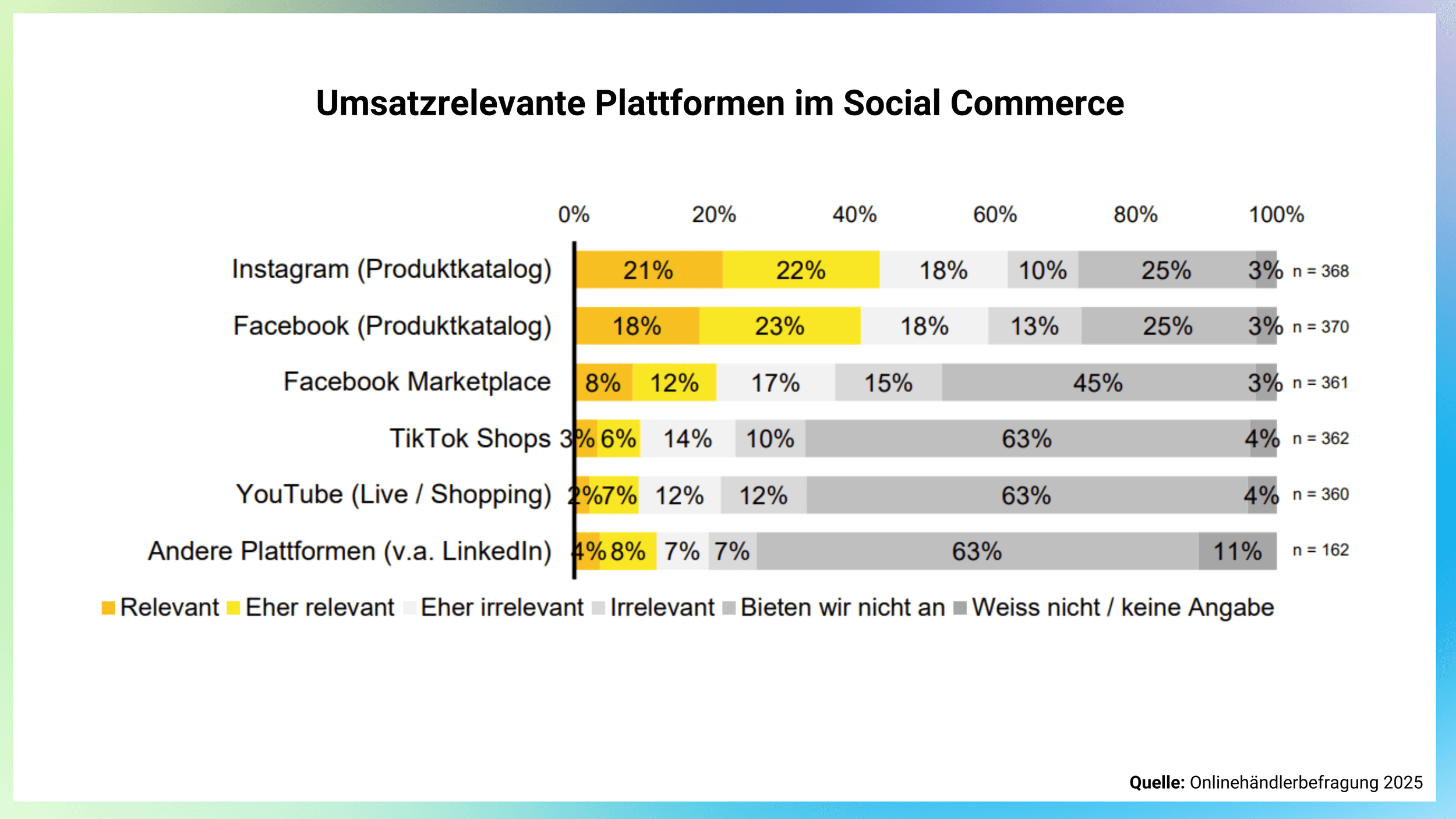
If you are questioning which channels to focus on, the numbers of the Online Retailer Survey 2025 can help. In the image below, you can see which platforms the survey participants consider most relevant from their perspective.
Instagram & Facebook
Meta's product catalogs (Instagram and Facebook) are still the most used channels for Social Commerce and were perceived as the most revenue-relevant.
Instagram is relevant or rather relevant for 43 percent of the surveyed retailers.
Facebook closely follows with 41 percent.
Here, features like product tagging in posts and stories work very well to drive traffic to your shop.
The Facebook Marketplace also stands out as a relevant platform in the survey. You can imagine it as a huge digital flea market where used and new things are bought and sold (similar to eBay or Ricardo).
TikTok
There is a lot of talk about TikTok, but its relevance for Swiss trade is (still) low. The in-app marketplace "TikTok Shop" is rated as relevant by only 9 percent of retailers. For the vast majority, the platform is currently not an issue. This is probably also due to the fact that functions like the TikTok shop are not yet available or established in Switzerland (as of January 2026). For you, this means: Keep an eye on TikTok, but don't stress if you haven't been active there yet.

3. Benefits for online retailers
Even if sales may not always be generated directly via the platforms, Social Commerce offers benefits you shouldn't miss. The practice presents opportunities for brands of all sizes.
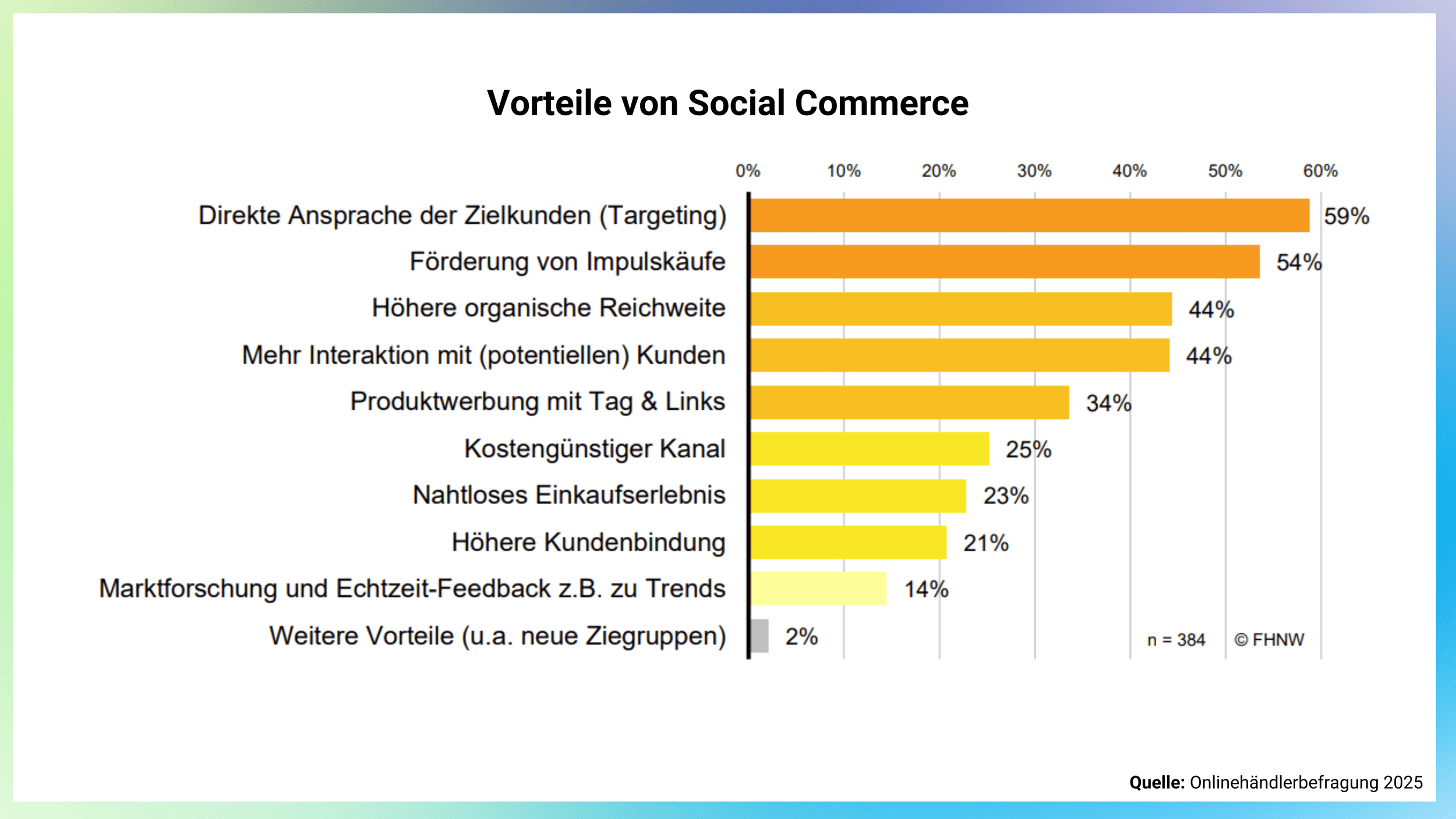
According to the Online Retailer Survey 2025, retailers see mainly the following points as advantages:
Direct access to target customers
59 percent of retailers appreciate being able to reach their target audience directly. Unlike a newspaper ad that all readers see, you can surgically filter on social media. If you sell hand-thrown ceramics, for example, you don't just show your vases to "everyone," but specifically to users who are interested in "interior design" and "sustainability." Thanks to personalization, you reach exactly the people who are most likely to buy your products. This saves advertising budget, and you reach your customers faster. Additionally, potential customers click, search, or wait less, which is why they are less likely to abandon their purchases. This leads to higher purchase completions.
Promotion of impulse purchases
54 percent of respondents see the greatest leverage here. Social media is a place of inspiration. A user may not be actively looking for a new coffee cup but sees an aesthetic image in your feed and immediately thinks: "I must have that!" Through visual presentation, you create needs that weren't present before. The emotional impulse leads directly to purchase before rational doubts ("Do I really need this?") arise.
More interaction with (potential) customers
Social Commerce goes beyond mere transactions. It allows you to build a vibrant community around your brand. You receive direct feedback through comments and likes ("Which color do you prefer? Blue or red?"). Customers can ask questions, exchange among themselves, and give recommendations. This closeness creates trust and binds customers to your brand in the long term. This is something an anonymous online shop usually cannot offer.
In the following graphic, you will find more advantages mentioned by the retailers:
4. Challenges and best practices
Challenges
As promising as Social Commerce sounds, it is not a walk in the park. In daily business, you will encounter hurdles you should be aware of:
Logistics and expectations
Social media is extremely fast-paced. Those who see a product there and click spontaneously often expect their purchases to be processed lightning fast. Your customer service and logistics need to keep up with this pace. That also means you have to respond to questions in comments or direct messages (DMs) much faster than to a classic email.
The data jungle
Technological integration is often trickier than expected. Cleanly linking data from Instagram and similar platforms to your own CRM system or online shop can quickly become complex. Without clean data management, you risk losing track of inventory or double-managing customer data.
The constant battle for attention
The competition never sleeps, and your customers' feeds are full. To remain visible, it's not enough to occasionally upload a product photo. You need continuously creative and authentic content that entertains and stands out. Posting once and waiting isn't enough – community management requires time and resources.
"Invisible" products have a harder time
Not everything can be sold equally well visually. While fashion or decor items shine in pictures, "invisible" products struggle. Complex B2B software or abstract services are often harder to market via purely visual channels than lifestyle products that can simply be photographed.
Best Practices

Authenticity always wins:
Glossy advertising photos are often ignored. Instead, use User-Generated Content (UGC), like photos and videos that your real customers have made. If you work with influencers, make sure they truly fit your brand and are credible.

Optimize the mobile experience:
Forget the desktop. Social Commerce takes place almost exclusively on smartphones. Ensure that the checkout process on mobile is absolutely flawless and lightning fast. Nothing kills purchase momentum faster than a page that isn't navigable on a small display.
