
Published:
Last updated (content):
Last updated (prices):
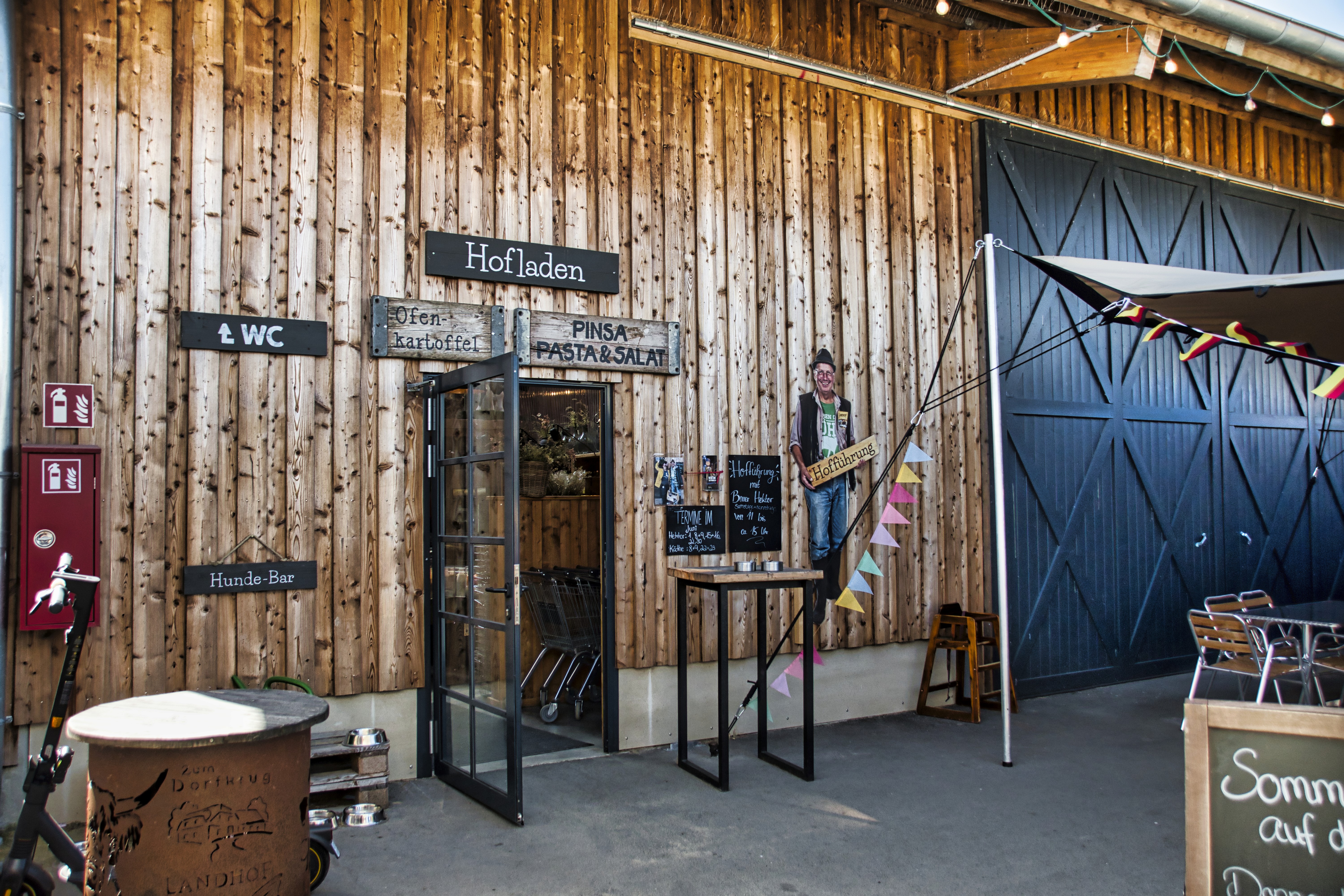
Swiss self-service farm shops can nowadays be operated without staff and without an honesty box – with TWINT QR stickers, QR codes with a payment page, or vending machines with card payment. According to a study by the University of Bern, the traditional honesty box (cash tin) causes around 5% shrinkage – and even more for higher-value products such as honey or meat. Cashless solutions reduce this shrinkage, simplify bookkeeping, and offer customers the payment experience they are used to.
This guide compares the three common models for cashless payment in unstaffed farm shops, shows the specific costs per transaction, and helps you find the right solution for your business.
1. The honesty box is history: Why Swiss farm shops are switching
More than 11,000 Swiss agricultural businesses sell directly from the farm – a figure that has risen by around 60% in recent years. For most of them, sales operate on a self-service basis: eggs, vegetables, honey, flowers, or milk are placed in a room or shelter; customers serve themselves and put the money into a cash box. This honesty box model works better in Switzerland than in many other countries – researchers at the University of Bern estimate payment morale at around 95%. That sounds high, but converted into figures it still means noticeable losses: with an annual turnover of CHF 20,000, around CHF 1,000 is missing.
In addition: fewer and fewer customers carry exact change. Anyone carrying only a 50-franc note either does not buy – or leaves a note promising to pay later. Cashless payment solves several problems at once: no shrinkage due to theft, no change-giving issue, and complete documentation of every transaction for bookkeeping.
2. Three models compared: TWINT QR sticker, QR code payment, and vending machine
For unstaffed farm shops, essentially three solutions come into question. Each has its place – depending on product range, turnover volume, and willingness to invest.
Criterion | Honesty box | TWINT QR sticker | QR code with payment page | Vending machine with card payment |
Investment | CHF 0–50 (cash box) | CHF 0 (sticker free of charge) | CHF 0–19/month (depending on plan) | CHF 3,000–10,000+ |
Ongoing costs | None | 1.3% per transaction | 1.25% + CHF 0.30 (QR Pay, Free plan) | Depending on provider |
Payment methods | Cash only | TWINT only | TWINT, Visa, Mastercard, Apple Pay, Google Pay, etc. | Cash, card, TWINT |
Amount control | None (honesty) | None (customer enters amount themselves) | High (amount preset or selectable) | Very high (product selection on screen) |
Shrinkage risk | High (∼5%+) | Medium (goods taken, amount is incorrect) | Low (payment documented) | Very low (product dispensed only after payment) |
Technical effort | None | Minimal (affix sticker) | Low (print QR code, open online account) | High (installation, power, internet if applicable) |
Bookkeeping | Manual (cashing up) | Partially automated (TWINT statement) | Automated (Dashboard, export) | Automated (monitoring, reports) |
The table shows: there is no universally best model. For many farm shops, a combination makes sense – such as a TWINT QR sticker as a baseline level and, in addition, a QR code with a payment page for customers who want to pay by card.
3. TWINT QR sticker in the unstaffed farm shop: simple, but with risks
The TWINT QR sticker is the simplest solution for cashless payment without staff. More than 1,000 Swiss farm shops have been using it since the Swiss Farmers' Union (SBV) launched the solution in 2019 in cooperation with TWINT. The principle: customers scan the QR code with their TWINT app, enter the amount themselves, and confirm the payment. The amount is transferred directly to the farm shop's account.
The major advantage: zero investment, zero ongoing fixed costs. You need no terminal, no electricity, no internet. Depending on the provider, the transaction fee is around 1.3% – for an egg carton for CHF 6, that is 8 centimes. That is less than the shortfalls typically incurred with an honesty box.
What the TWINT QR sticker cannot do
The weakness lies in the lack of amount control. Customers type in the amount themselves – the system does not check whether the entered amount corresponds to the price of the goods. There is therefore no technical protection against underpayment. Furthermore, the TWINT QR sticker accepts TWINT exclusively. Anyone without a Swiss banking app – such as tourists or cross-border commuters – cannot pay.
4. QR code with payment page: more control, more payment methods
The second option goes a step further: a QR code that does not lead to the TWINT app, but to a payment page in the browser. There, the amount is either already preset or customers select the product from a list. Payment is made via TWINT, credit card, debit card, Apple Pay, Google Pay, or another supported payment method.
Advantages over the pure TWINT QR sticker
First: amount control. You determine which amounts are available for selection – such as "Egg carton CHF 6", "Honey large CHF 12", "Bouquet of flowers CHF 8". Customers cannot enter an arbitrary amount. Second: more payment methods. Even customers without TWINT can pay. Third: receipt via email and a clear transaction overview in the Dashboard.
How does this work technically?
You create a payment page or a payment link via a payment service provider. This generates a QR code, which you print out and put up in the farm shop. There are two variants: a static QR code per product (e.g. a QR code by the egg shelf, one by the honey) or a dynamic QR code via which customers select the product themselves on the payment page. Both variants work without a terminal, without electricity, and without internet – the customer's smartphone handles everything.
Cost example
For a payment of CHF 6 via Payrexx QR Pay, 1.25% + CHF 0.30 applies – that is 38 centimes, whether paid via TWINT or card. From CHF 19/month (Standard plan), card fees drop to 1.65% + CHF 0.18 = 28 centimes. For farm shops with few card transactions, the free plan is sufficient; with regular card volume, the Standard plan pays off.
5. Vending machines and refrigerators with card payment: when hardware is worthwhile
The third option is the farm shop vending machine: a device with a touchscreen, barcode scanner, and integrated payment function (cash, card, TWINT). Vending machines offer the highest level of control because products are dispensed only after payment. In Switzerland, providers such as BiLL GmbH, itWorks (speedy), or Ruedu are active.
For whom vending machines are worthwhile
Vending machines pay off with higher turnover volume (from approx. CHF 30,000–50,000 annual turnover), with higher-value products (meat, cheese, milk), and if the farm shop is located in a high-traffic spot, such as on a main road. Typical investment costs range between CHF 3,000 and CHF 10,000 depending on the equipment. Added to this are ongoing costs for electricity, internet, maintenance, and transaction fees. A tablet-based self-service POS system (e.g. itWorks speedy) is more affordable: from approx. CHF 1,300 for the hardware and around CHF 37/month for software and card payment.
Practical tip: electricity and internet
Vending machines and POS systems require electricity and usually an internet connection. In remote farm shops without a power connection, this is a real obstacle. In these cases, TWINT QR stickers or QR codes with a payment page remain the only realistic option, as they do not require any infrastructure on site.
6. Theft, shortfalls, and control: how you keep track
The fundamental problem in an unstaffed farm shop remains: nobody checks whether payment was made. Even cashless solutions do not completely eliminate theft – someone can take goods without scanning the QR code. However, they reduce shrinkage significantly because the honest majority pays correctly and transactions are documented.
Measures to reduce shrinkage
According to the study by the University of Bern, video surveillance increases payment morale by around 5%. A sign indicating the camera is mandatory in Switzerland, and the camera must not capture public land. In addition, clearly visible price tags, clear payment instructions, and a friendly atmosphere help. Statistically, farm shops located in or near a village or town are less frequently affected by theft than those in remote locations.
For bookkeeping, cashless solutions offer a decisive advantage: every transaction is documented. With TWINT, you see incoming payments in the bank or TWINT statement. With QR payment pages, you have a Dashboard with all transactions, export functions, and automatic reconciliation. This saves time during cashing up and simplifies VAT accounting.
7. Seasonal products, changing prices: collecting payments flexibly for strawberries, eggs, and honey
Farm shops often sell seasonal products with fluctuating prices. Strawberries cost CHF 8 per punnet this week, perhaps CHF 6 next week. The bunch of asparagus is sold out, but fresh courgettes are available. This poses challenges for any payment system.
Method | Price change | Effort | Suitability for frequent changes |
TWINT QR sticker | Not necessary (customer enters amount) | None | Good (but no amount control) |
Static QR code per product | Print new QR code | Medium (generate new code and print out) | Laborious with frequent changes |
Dynamic QR code with product list | Adjust online in the Dashboard | Low (2 minutes on a smartphone) | Ideal for changing assortment |
Vending machine | Adjust in the system | Low (cloud access) | Good (but high initial investment) |
Practical example: farm shop with three product lines
A business sells eggs (CHF 6/carton), honey (CHF 12/jar), and seasonal vegetables (CHF 4–8, variable). For the eggs and honey, a static QR code per product is suitable: the price rarely changes, and the QR code hangs on the relevant shelf. For vegetables, a dynamic QR code with a product list is more practical: you update the assortment and prices conveniently online, and the same QR code on the vegetable shelf always shows the current offer.
Weatherproof QR codes
An outdoor QR code must be UV-resistant, waterproof, and robust. Laminated printouts last a few months, but yellow over time. Acrylic glass holders or aluminium signs with an embedded QR code are better. Some payment service providers supply weatherproof stickers or signs. Before putting it up, check whether the QR code is legible even in sunlight and from different angles.
8. Checklist: Setting up your self-service farm shop for cashless payments
Take stock: how many products, which price categories, how often do prices and assortment change?
Check infrastructure: is electricity and internet available on site? If not, only TWINT QR stickers or QR codes with a payment page come into question.
Set up TWINT QR stickers as a base – free of charge, done in 10 minutes, covers the majority of Swiss customers.
Set up QR codes with a payment page in addition for customers who want to pay by card, Apple Pay, or Google Pay.
Label prices clearly – even if the QR code presets the amount. Customers need to know what they are paying before scanning.
Affix QR codes in a weatherproof manner: laminated, in acrylic glass, or as an aluminium sign. Test readability in sunlight.
Consider video surveillance: increases payment morale. A notification sign is mandatory; public land must not be captured.
Set up bookkeeping: use the transaction export of the payment service provider. Record TWINT turnover and cash turnover separately.
Keep an honesty box as a complement? If yes, only as a backup for the few customers without a smartphone. Do not leave a large cash deposit in the shop.
Test and optimize: evaluate transactions after 4 weeks, compare shrinkage, adjust QR code placement or product list if necessary.
If you are looking for a QR payment solution without hardware, Payrexx QR Pay offers an option specially suited for small amounts and self-service: 1.25% + CHF 0.30 per transaction on the Free plan, plus TWINT, credit cards, and mobile wallets via a hosted payment page.
The Free plan costs nothing per month; prices and products can be adjusted online at any time. Via payment links and payment pages, even farm shops without a website and without technical knowledge can accept cashless payments in just a few minutes. Find out more at payrexx.com/products/qr-pay.
Frequently asked questions about cashless payments in your self-service farm shop
How much does TWINT cost for a farm shop?
Depending on the provider, the TWINT transaction fee for farm shops is around 1.3 % per transaction. For a purchase of CHF 6, that is 8 centimes. The QR sticker itself is free of charge. There is no monthly basic fee.
See detailed answer
Do you need internet in your farm shop for cashless payment?
No, not for QR-based solutions. With the TWINT QR sticker and QR codes with a payment page, your customers use their own smartphone and their own mobile network. The farm shop itself needs neither electricity nor internet.
See detailed answer
How do you prevent customers from entering the wrong amount in TWINT?
The pure TWINT QR sticker does not offer any amount control u2013 customers enter the amount themselves. To avoid this, you can use a QR code with a payment page instead, where the amount is already predefined.
See detailed answer
Can you offer TWINT QR-stickers and card payments at the same time?
Yes. You can display a TWINT QR sticker and next to it a QR code with a payment page. Customers choose how they want to pay. Both solutions work without hardware.
See detailed answer
Do you need to register a business for your farm shop in order to accept cashless payments?
If you are already selling products as a farm, you do not usually need an additional business registration for cashless payments. However, you will need a bank or business account to which payouts can be made.
See detailed answer
Is a farm shop vending machine worth it for small businesses?
For small businesses with less than CHF 20,000 in annual turnover from the farm shop, an automatic machine is usually not financially viable. QR-based solutions are then the better choice: no investment, no running fixed costs.
See detailed answer