
QR-bill as a payment method in the Swiss online shop: This is how it works
The Swiss QR-bill (Swiss QR Invoice) can be used as a fully fledged payment method in e-commerce checkout — not just for sending invoices by post. Buyers receive a QR code after placing their order, which they can scan and pay directly via their e-banking app. For merchants, the QR-bill is the most cost-effective form of purchase on invoice with transaction fees from 0.50% (at least CHF 1.50 per transaction), although without credit checks and without risk assumption.
Published:
Last updated (content):
Last updated (prices):
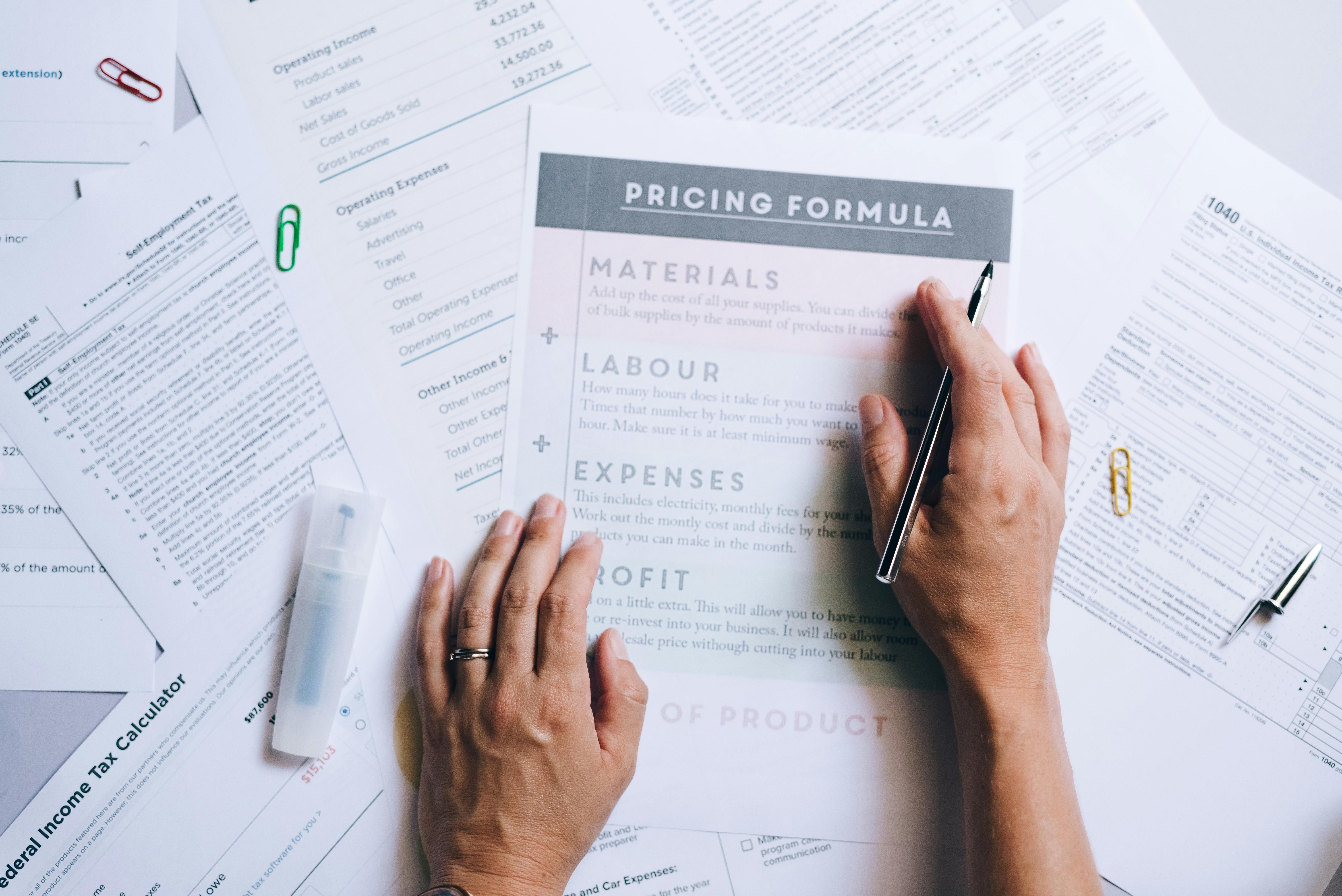
The Swiss QR-bill (Swiss QR Invoice) can be used as a full-fledged payment method in e-commerce checkout — not just for sending invoices by post. After placing an order, buyers receive a QR code that they scan and pay directly via their e-banking app. For merchants, the QR-bill is the most cost-effective form of purchase on account with transaction fees starting at 0.50% (at least CHF 1.50 per transaction), albeit without credit checks and without risk assumption.
This guide shows you step by step how the QR-bill works in online checkout, how you automate payment reconciliation, and which shops this model is particularly suitable for.
1. What the QR-bill is in an e-commerce context — and what it is not
The QR-bill was introduced in 2020 by the Swiss Bankers Association (SwissBanking) and SIX Group to replace the old payment slips (red and orange) with a standardised, digitally readable format. At its core, it is a standardised payment part with a Swiss QR Code containing all payment details: recipient IBAN, amount, reference number, and structured payment information.
In an e-commerce context, this means: the QR-bill is not sent on paper, but provided as a digital payment part during checkout or by email after the order. Buyers scan the QR code with their mobile banking app and initiate the payment. The QR-bill is not a BNPL solution — no credit check takes place, and the default risk lies entirely with you as the merchant.
Important: The QR-bill as a payment method in checkout is not the same as traditional invoicing. With traditional invoicing, you create an invoice manually and send it — the process is decoupled from the shop. With the QR-bill as a checkout payment method, the process is integrated into the ordering process, and payment reconciliation can be automated.
2. How the QR-bill works in online checkout: Process for buyers and merchants
The process is divided into five steps:
Step 1: The buyer selects "Purchase on account" or "QR-bill" as the payment method in the checkout. The PSP or shop system generates a QR-bill with a unique QR reference (QRR) or SCOR reference.
Step 2: The order is confirmed. The buyer receives the QR-bill as a PDF via email or directly on the order confirmation screen — with the Swiss QR Code and the payment terms.
Step 3: The buyer opens the e-banking or mobile banking app and scans the QR code. All payment information is filled in automatically. The payment is initiated with a single click.
Step 4: The buyer's bank transfers the amount to the recipient IBAN. Depending on the bank, this takes 1–2 business days within Switzerland.
Step 5: You as a merchant receive a CAMT.054 credit notification from your bank. This contains the QR reference, which allows the payment to be automatically assigned to the order.
3. Payment reconciliation: CAMT.054, reference number, and automatic assignment
Automatic payment reconciliation is the biggest efficiency gain of the QR-bill compared to traditional invoices sent by post. It works via three components:
The QR reference (QRR) is a 27-digit reference number based on the QR-IBAN. It is uniquely generated for each order. Alternatively, the Structured Creditor Reference (SCOR) according to ISO 11649 can be used, which also works Outside Switzerland.
The CAMT.054 notification is an XML file in the ISO 20022 standard that your bank provides to you automatically. It contains all credits along with their respective reference numbers. Your ERP system, accounting tool, or PSP can import this notification and automatically assign the payment to the correct order.
In practice, this means: If a customer transfers CHF 89.00 to your account containing the QR reference 21 00000 00003 13947 14300 09017, your system automatically matches the payment to order #13947. Without manual reconciliation, without sifting through bank statements.
Requirement: You need a QR-IBAN (not just a standard IBAN), which you apply for at your bank. In addition, your software must be able to process CAMT.054 notifications. Most modern ERP and accounting solutions (bexio, Abacus, Run my Accounts, Klara) support this natively. If you use the QR-bill as a payment method via Payrexx Pay, Payrexx handles the reconciliation: The payment is automatically assigned to the transaction and transferred with the weekly payout.
4. Payment terms and dunning: When is the invoice due, what happens in case of default?
Unlike BNPL providers that specify a fixed payment term of 14 or 30 days, you define the payment term yourself with the QR-bill. Typical terms are 10, 14, or 30 days from the invoice date.
If the payment deadline has passed and no payment has been received, your dunning process begins. In Switzerland, there is no statutory dunning requirement — you can basically initiate debt collection proceedings directly after the deadline expires. In practice, however, a stepped process is recommended:
Payment reminder after 5–7 days overdue, formulated politely. First warning after 14 days overdue, with a new payment term of 10 days. Second warning after another 10 days, threatening debt collection. Debt enforcement request (Betreibungsbegehren) at the responsible debt collection office (Art. 67 SchKG) if payment is still not made.
The costs for a debt enforcement request range between CHF 7 and CHF 400 depending on the claim amount according to the Schedule of Fees under the SchKG (GebV SchKG). You as the creditor must advance these costs.
5. QR-bill vs. traditional invoice by post: What changes for online shops
Switching to the QR-bill as a checkout payment method offers several advantages over sending traditional invoices:
Dimension | Traditional invoice by post | QR-bill in checkout |
Invoice creation | Manually or via ERP | Automatically by PSP/shop system |
Dispatch | Postal mail or PDF via email | Digital within the ordering process |
Manual (checking bank statements) | Automatic via CAMT.054 | |
Payment duration | 3–10 days (postal delivery + bank transfer) | 1–2 days (direct bank transfer) |
Error rate | High (typos, incorrect IBAN) | Low (QR code contains all data) |
Cost per invoice | Postage + printing + manual effort | Transaction fee (0.50–0.60%, min. CHF 1.50) |
Default risk | Merchant | Merchant (identical) |
6. Which shops and industries the QR-bill is particularly suitable for
The QR-bill as a checkout payment method is particularly suitable for:
B2B shops and ordering platforms where corporate clients are accustomed to paying by bank transfer. The QR-bill makes this process digital and automatable.
Shops with a high proportion of regular customers where the default risk is known and low. If you know that 95% of your customers pay reliably, you do not need expensive BNPL risk coverage.
Shops with high average order values (over CHF 200), where the percentage fee of the QR-bill (0.50%, min. CHF 1.50) is significantly cheaper than the BNPL fee (2–3%).
Clubs, associations, and non-profit organisations where membership fees and donations are collected via QR-bill.
The QR-bill is less suitable for shops with a high share of new customers and small basket sizes in the fashion or lifestyle segment — here, the default risk is high, and BNPL with risk coverage is the better choice.
Checklist: Setting up the QR-bill as a payment method in your online shop
Apply for a QR-IBAN with your Swiss bank if you do not already have one.
Check whether your PSP or shop system supports the QR-bill as a checkout payment method.
Ensure that your accounting software can process CAMT.054 notifications.
Define the payment term (10, 14, or 30 days) and communicate it clearly on the QR-bill.
Set up an automated dunning process: payment reminder, 1st warning, 2nd warning.
Decide whether to offer the QR-bill alongside BNPL methods — both can be offered at the same time.
Test the process: Place an order in your own shop, scan the QR code, and check if the matching works.
Frequently asked questions about the QR-bill as a payment method in the online shop
What is the difference between QR-bill and purchase on account with Klarna?
With the QR-bill, you as a merchant bear the default risk yourself and only pay a 0.50–0.60% fee for it (at least CHF 1.50 per transaction). With Klarna, Klarna assumes the risk and credit check, but charges 1.60–2.40 % plus a fixed fee for it.
See detailed answer
How does the automatic payment reconciliation work with the QR-bill?
Every QR-bill contains a unique reference number (QRR or SCOR). When your customers pay, your bank provides a CAMT.054 message with this reference. Your system automatically assigns the payment to the order.
See detailed answer
Do you need a QR-IBAN for the QR-bill in your online shop?
Yes, if you want to work with QR-references (QRR) — and this is recommended for automatic payment reconciliation. You can apply for the QR-IBAN free of charge at your Swiss bank.
See detailed answer
Can you also use the QR-bill for B2B customers in the online shop?
Yes, the QR-bill is actually particularly well-suited for B2B, because corporate customers are used to paying by bank transfer. The process is automated and accelerated by the QR code.
See detailed answer
How much does the QR-bill cost as a payment method in the online shop?
The transaction fee is 0.50 to 0.60% depending on the plan, at least CHF 1.50 per transaction. This makes the QR-bill the most cost-effective form of purchase on invoice — however, you bear the default risk yourself.
See detailed answer
How long does it take for payment by QR-bill to be received?
Usually 1–2 business days if your customer triggers the payment via e-banking or mobile banking. The prerequisite is that both accounts are with a Swiss bank.
See detailed answer