
Payment solutions for Swiss farm shops, weekly markets and direct marketing – 5 practical guides
Published:
Last updated (content):
Last updated (prices):
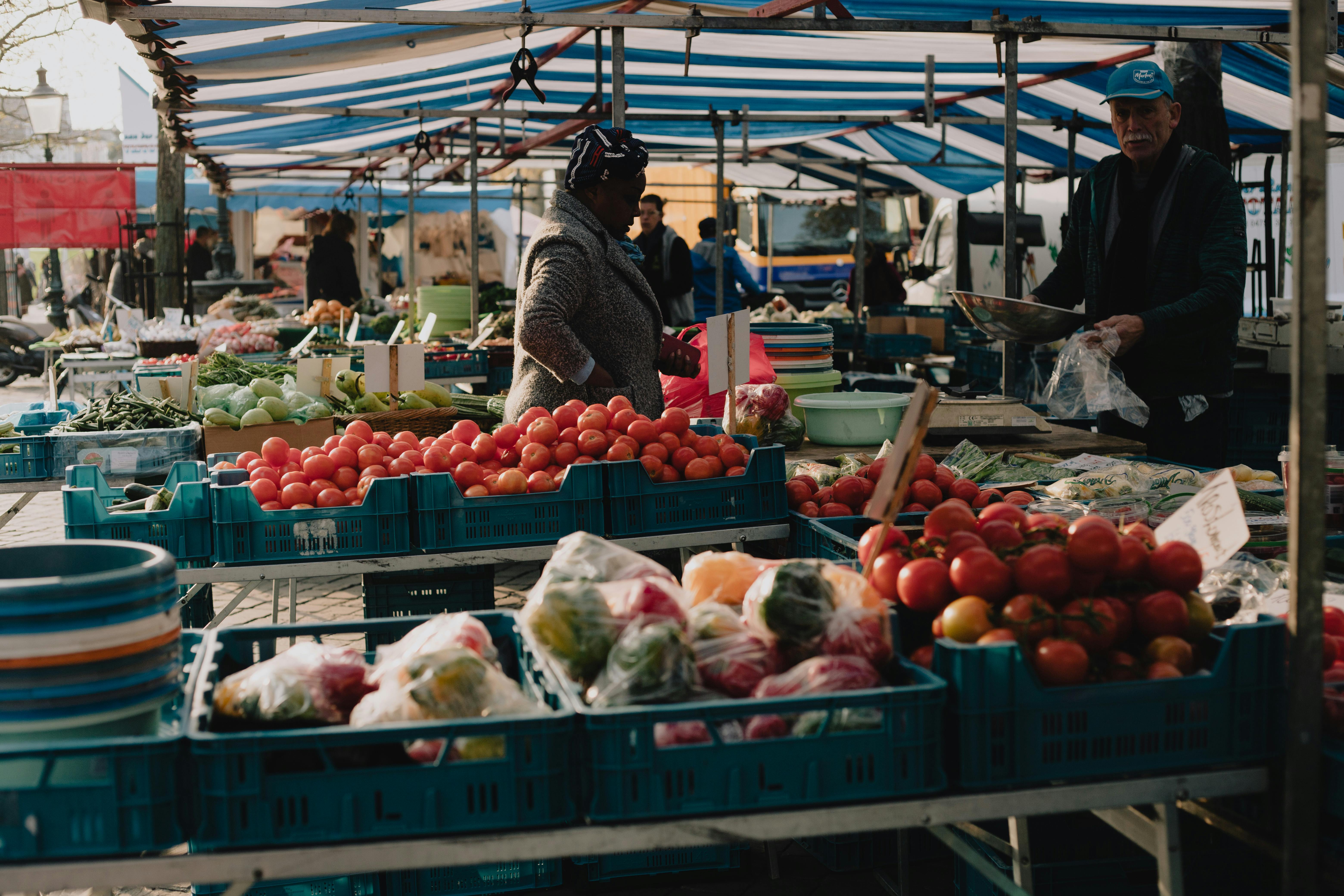
Over 11,000 Swiss agricultural businesses sell directly from the farm – an increasing number of them cashless. But which solution is right for your business? A self-service farm shop with a QR code, a mobile card terminal at the weekly market, Tap to Pay on a smartphone, QR-Pay for all payment methods, or a solution for international guests? Our five guides show you step-by-step how each option works, what it costs, and which sales situation it is best suited for.
This overview page summarises the five guides and helps you find the right payment solution for your business model – whether it's self-service by the roadside, a staffed farm shop, a weekly market, or a seasonal stall.
Guide 1: Running a cashless self-service farm shop
Honesty box · TWINT QR · QR code with payment page · Vending machine
The traditional honesty box results in around 5% shrinkage. This guide compares three cashless alternatives for unstaffed farm shops: TWINT QR stickers (simple, but without amount control), QR codes with a payment page (preset amount, all payment methods), and vending machines with card payment (full control, but high investment). Includes a comparison table, cost calculation based on EUR 6–12 per purchase, and practical tips for weatherproof QR codes.
Who it's for: Unstaffed self-service farm shops, roadside farm stalls, egg/honey/vegetable sales, self-service fridges.
Key topics: Honesty box vs. TWINT QR vs. QR payment page vs. vending machine, shrinkage reduction, seasonal pricing, weatherproof QR codes, accounting.
→ To the guide: Running a cashless self-service farm shop
Guide 2: Card terminals for weekly markets and farm shops
Hardware · 4G SIM · Receipt printing · TWINT on the terminal · Provider comparison
A physical card terminal is the most robust solution for regular use at the weekly market. This guide compares Payrexx (N910 Pro, N6, or N86), SumUp, Worldline, and Nexi – detailing hardware costs, transaction fees, and the crucial question: TWINT on the terminal, yes or no? Includes a concrete cost calculation for 12 market days per month with an average transaction value of EUR 18.
Who it's for: Market traders with regular operations, staffed farm shops, businesses needing to print receipts, higher turnover volumes.
Key topics: Device types (Bluetooth, 4G, all-in-one), SumUp vs. Payrexx vs. Worldline, TWINT on the terminal, end of Maestro, battery life and 4G at the market.
→ To the guide: Card terminals for weekly markets and farm shops
Guide 3: Tap to Pay – Smartphone as a card terminal
No hardware · NFC · Android · SoftPOS
Tap to Pay turns an NFC-enabled smartphone into a Lector de tarjetas – without additional hardware, without fixed costs. Ideal as an entry-level solution or backup. The guide explains the requirements (Android 8.1+ for Payrexx incl. TWINT, iPhone XS+ for Apple Tap to Pay without TWINT), compares it with terminals and TWINT QR, and shows the specific workflow at the market stall.
Who it's for: Beginners without a hardware budget, seasonal businesses, mobile comerciante, backup during peak hours.
Key topics: Android vs. iPhone, TWINT only on Android, battery and power bank, practical workflow (weigh, tap, pay), cost comparison for a EUR 15 purchase.
→ To the guide: Tap to Pay at weekly markets and farm shops
Guide 4: QR-Pay – One QR code, all payment methods
No terminal · No smartphone required · TWINT + Card + Wallet · 1.25% + EUR 0.30
QR-Pay is a QR code that leads to a payment page in the browser. There, customers pay using TWINT, Visa, Mastercard, Apple Pay, Google Pay, or PostFinance Pay. The core advantage over a pure TWINT QR sticker: amount control, more payment methods, and suitability for tourists. The transaction fee is 1.25% + EUR 0.30 on the Free plan.
Who it's for: Self-service farm shops (primary solution), staffed market stalls (secondary channel), seasonal stalls (no fixed costs), businesses with international clientele.
Key topics: TWINT QR vs. QR-Pay vs. payment link, customer journey (scan → select → pay), dynamic vs. static QR, price adjustments, combination with terminal/Tap to Pay.
→ To the guide: QR-Pay for farm shops and weekly markets
Guide 5: Accepting payments from tourists at weekly markets and farm shops
International cards · Apple Pay · Foreign currency · DCC
TWINT does not work for tourists. Anyone selling in Lucerne, Interlaken, Zermatt, or along a mountain pass loses 20–40% of their turnover without card payments. The guide explains which payment methods international guests expect (Visa, Apple Pay, Alipay), how Dynamic Currency Conversion (DCC) works, and what cross-border transactions cost. QR-Pay as a universal solution for Swiss locals and tourists.
Who it's for: Weekly markets in tourist regions, farm shops along hiking routes, seasonal stalls in holiday resorts.
Key topics: The TWINT gap for tourists, DCC explained, interchange fees for foreign cards, Alipay/WeChat Pay, English signage, Euro cash.
→ To the guide: Accepting payments from tourists at weekly markets and farm shops
Which solution is right for your business?
All five options at a glance – sorted by use case, costs, and feature set.
Solution | Hardware | Fee from | TWINT? | Ideal for |
EUR 0 | 1.25% + 0.30 | Yes | Self-service, add-on, tourists | |
TWINT QR sticker | EUR 0 | 1.30% | Yes (TWINT only) | Micro-amounts, entry level |
EUR 0 (own smartphone) | 0.95% + 0.15 (with Better Fees) | Android: Yes | Seasonal business, mobile comerciante | |
Rental EUR 25/month | 0.95% + 0.15 (with Better Fees) | Depending on provider | Regular market trading, receipt printing | |
Vending machine | From EUR 3,000 | Provider-dependent | Partial | High goods value, full control |
All prices excl. VAT. Fees apply to Swiss consumer cards (Visa/Mastercard). As of 2026, indicative values.
Combinations for typical businesses
Unstaffed self-service farm shop: QR-Pay as the primary solution, TWINT QR sticker as backup. No terminal required.
Staffed farm shop business: Card terminal or Tap to Pay for the checkout, QR-Pay as a secondary channel during queues.
Weekly market (regular): Card terminal as the primary system, TWINT QR sticker as an add-on, QR-Pay for tourists.
Seasonal stall (strawberries, asparagus): QR-Pay or Tap to Pay – no fixed costs outside the season.
Tourist location (Lucerne, Interlaken): Terminal with international card acceptance + QR-Pay for universal coverage.
Accounting and settlement for farm shops and market traders
No matter which payment solution you choose – at the end of the market day, the numbers must add up. Modern payment providers offer an online Dashboard with daily closing, CSV export, and breakdowns by payment method.
Booking in the Swiss SME chart of accounts: Transaction fees are booked as bank charges (account 6840) – without VAT deduction, as payment services are exempt from tax according to Art. 21 para. 2 item 19 MWSTG. A clearing account (e.g. 1090) cleanly reflects the time delay between customer payment and payout.
Important: Always record gross revenue as income, not the net payout amount. This ensures the VAT assessment basis remains correct.
Frequently asked questions about payment solutions for farm shops and weekly markets
Which payment solution is the cheapest for a small farm shop?
QR-Pay (1.25% + EUR 0.30, no fixed costs) and the TWINT QR sticker (approx. 1.30%, no fixed costs) are the simplest options. Both do not require hardware or a monthly subscription.
View detailed response
Can I use multiple solutions at the same time?
Yes. Many businesses combine: TWINT QR stickers for quick micro-amounts, a terminal or Tap to Pay for the main checkout, and QR Pay for self-service areas or tourists.
View detailed response
Do I need internet at the farm shop or market stall?
For QR-based solutions (QR Pay, TWINT QR stickers): No. The payment runs via the customer's mobile network. For card terminals and Tap to Pay: Yes, you need 4G or Wi-Fi.
View detailed response
How much does cashless payment cost for a market stall per month?
This depends on the turnover and the chosen solution. For EUR 5,000 card turnover per month, the total costs are between EUR 63 (QR pay only) and EUR 150 (terminal + subscription). You can find details in the individual guides.
View detailed response
What is the difference between a TWINT QR sticker and QR-Pay?
The TWINT QR sticker only accepts TWINT, with no amount control. QR-Pay leads to a payment page with all payment methods (TWINT, Visa, Mastercard, Apple Pay) and the option to specify the amount.
View detailed response
Can I get started straight away or do I need a business registration?
If you already sell as an agricultural business, you do not need an additional business registration for cashless payments. You require a bank or business account and KYC verification with the payment provider.
View detailed response